

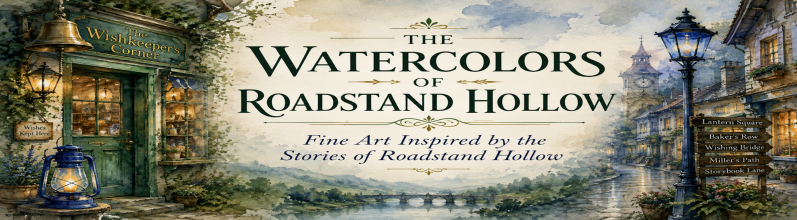
Fine Art Inspired by the Stories of Roadstand Hollow

Roadstand Hollow is more than a setting on a page. It is a growing story world of books, memorable places, original music, artwork, traditions, and stories still waiting to be told.
The Watercolors of Roadstand Hollow bring that world to life through a growing collection of original watercolor art inspired by the Tales of Roadstand Hollow book series.
Each piece captures a place, moment, or memory from the Hollow—from lantern-lit roads and familiar storefronts to quiet corners where wishes, friendship, forgiveness, and second chances have a way of finding people.
Begin with the watercolor collection inspired by Series 1, Book 1 — The Wishkeeper's Corner, then continue exploring Roadstand Hollow throughout this website. Discover the books, visit the Hollow's landmarks, meet its residents, hear its music, read its stories and dispatches, and follow the journey as new books and future series continue to expand the world of Roadstand Hollow.
Individual watercolor pieces are also available through the official Roadstand Hollow collection on Zazzle.
Collection - The Watercolors of Roadstand Hollow
Trilogy Series 1 – Tales of Roadstand Hollow
Book 2 – The Wishing Shelf of Roadstand Hollow
Welcome to the watercolor collection inspired by book 2, and welcome back to our continued Roadstand Hollow travels.
The Wishing Shelf of Roadstand Hollow continues the journey into a world where kindness, mystery, and unfinished dreams quietly shape everyday life. Some wishes disappear. Others wait patiently to be remembered. And a few begin searching for their way home. The lanterns are still glowing. The watercolors are still growing.
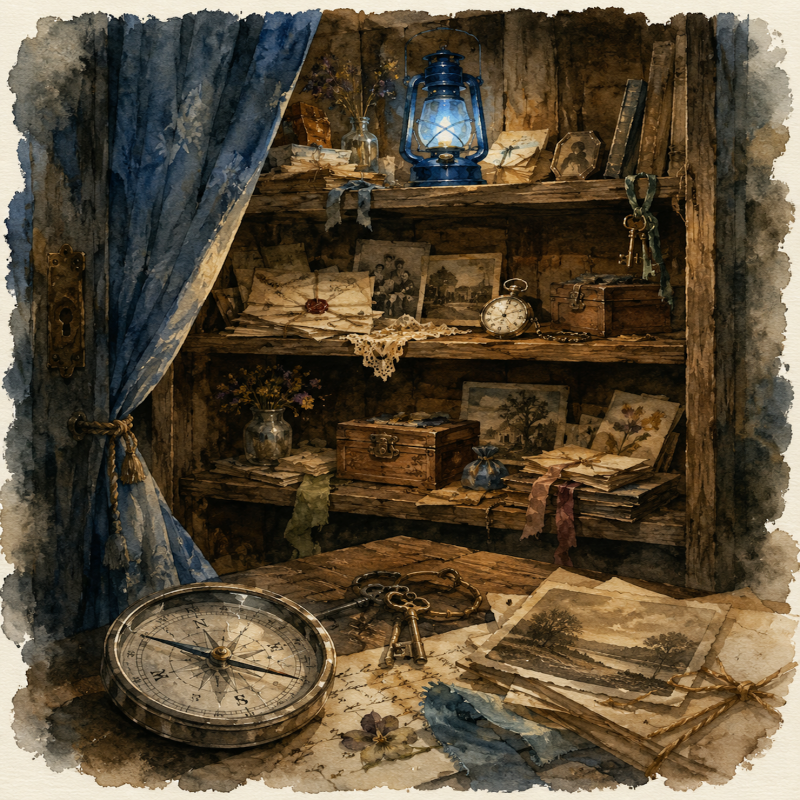
The Wishing Shelf of Roadstand Hollow: Plate RH-WC-B2-001
Hidden beyond a blue curtain, a shelf awaits, unlike any other in Roadstand Hollow.
Letters, photographs, keys, keepsakes, pressed flowers, and a cracked silver compass rest beneath the soft glow of a blue lantern. Each object once belonged to someone. Each carries a history. And none appears to have been placed there by accident.
The Wishing Shelf of Roadstand Hollow introduces the hidden archive at the heart of Book 2—a place where unfinished wishes are not discarded.
They wait.
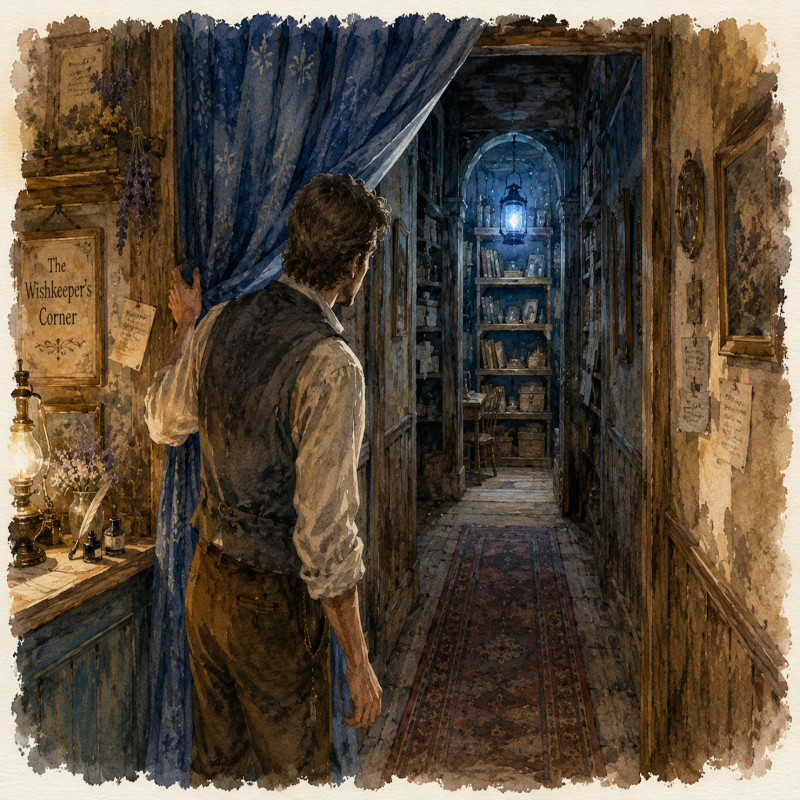
The Shelf Behind the Curtain, Plate: RH-WC-B2-002
Presents the first direct encounter with the hidden room at the center of Book 2.
Some rooms are hidden.
Others should not be able to exist at all.
When Elias draws aside the old blue curtain inside The Wishkeeper’s Corner, he discovers a narrow hallway extending far beyond the dimensions of the shop. At its end waits a lantern-lit room filled with letters, photographs, watches, keys, and forgotten keepsakes.
The Shelf Behind the Curtain captures the first moment one of Roadstand Hollow’s greatest secrets becomes visible.
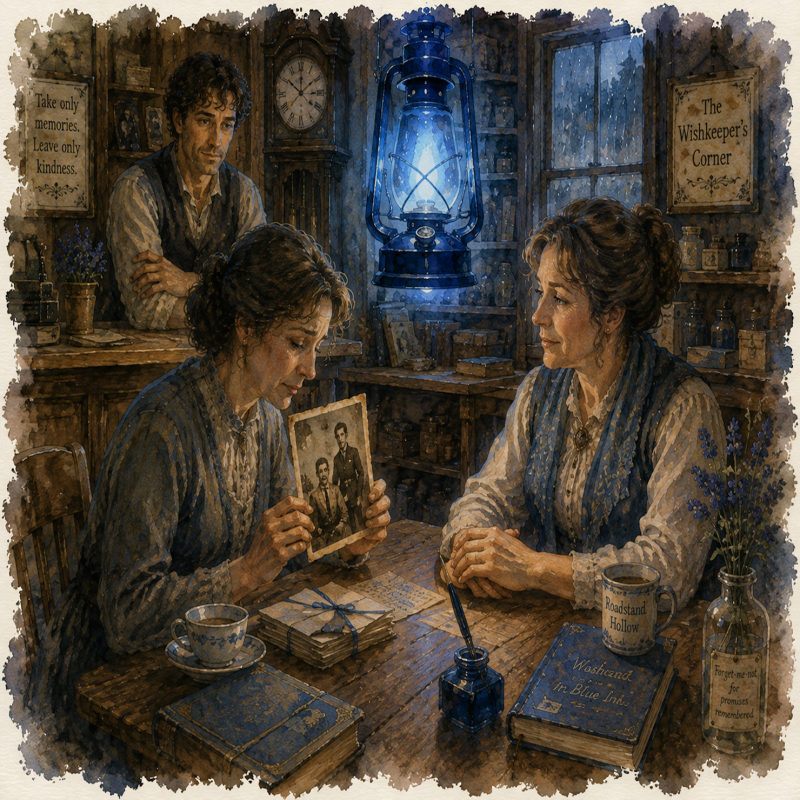
The Lantern That Flickered Blue: Plate RH-WC-B2-003
This plate presents an intimate interior scene within The Wishkeeper’s Corner and marks an important transition in the visual development of the Book 2 collection
Margaret Weller arrives at The Wishkeeper’s Corner carrying an old photograph—and a regret she has carried much longer.
As she remembers her brother and the apology they never had the opportunity to exchange, the blue lantern above her begins to brighten.
Nothing dramatic happens.
The lantern simply seems to listen.
The Lantern That Flickered Blue captures one of the first moments when Elias realizes that the mysteries of Roadstand Hollow may respond not only to wishes, but to the emotions people have carried with them for years.
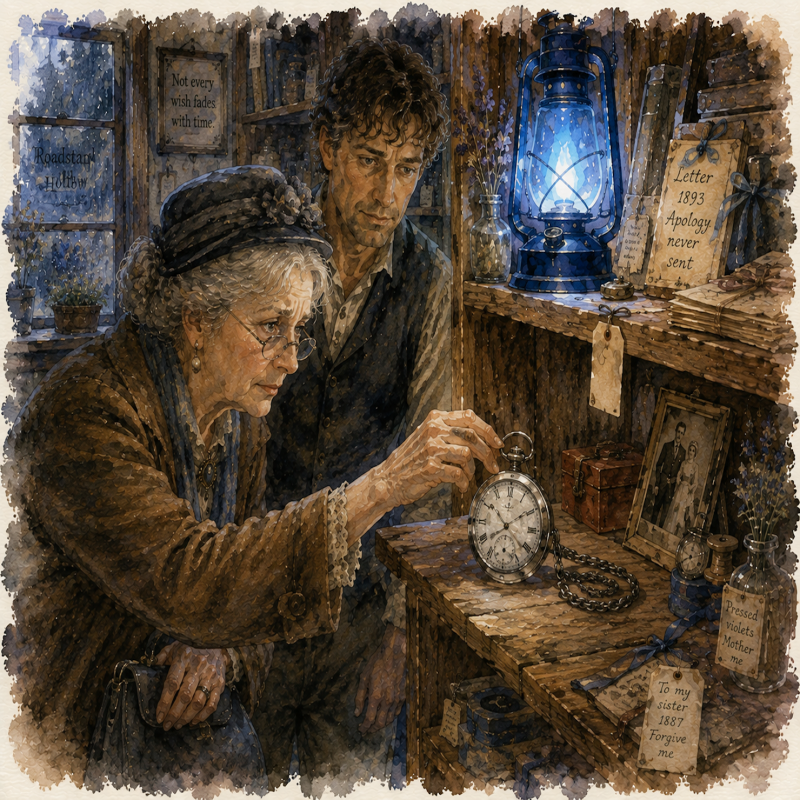
The Object with No Owner: Plate RH-WC-B2-004
Some memories survive even after names and details have disappeared. The Object with No Owner explores the quiet mystery of emotional memory—the possibility that love, longing, and unfinished goodbyes may remain attached to the ordinary things people once carried
Among shelves where nearly every forgotten object carries a name or note, one old silver pocket watch sits completely alone.
No owner. No label. No explanation.
When Mrs. Bellamy touches its chain, she remembers a rain-soaked train station she has never visited and feels the sorrow of someone she has never known.
The Object with No Owner asks one of Book 2's strangest questions:
Can an object remember after people forget?
A Wish Left Waiting: Plate RH-WC-B2-005
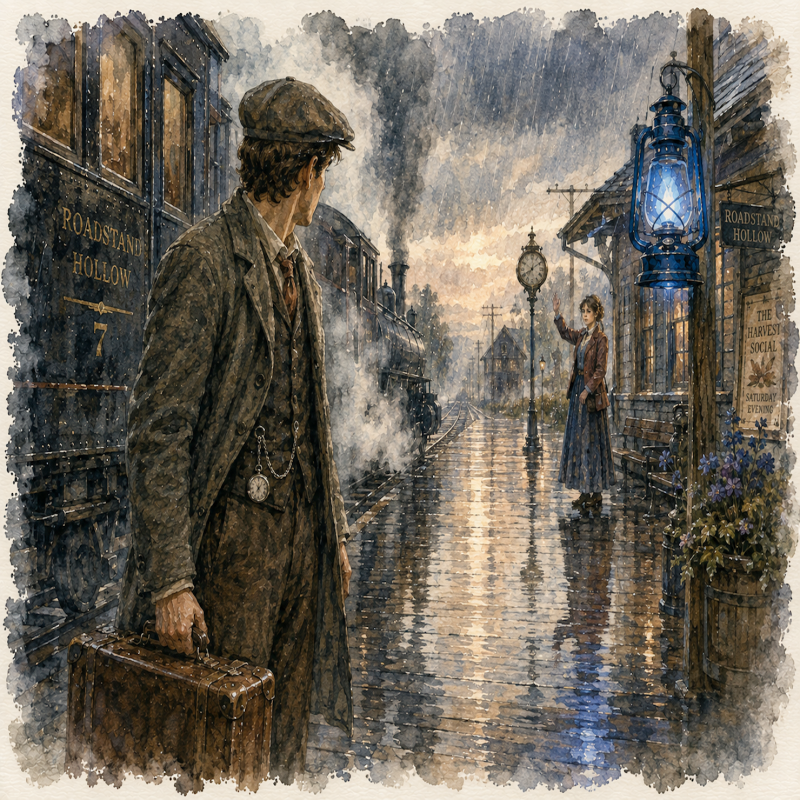
A Wish Left Waiting explores one of the more painful truths within Roadstand Hollow: sometimes people do not break promises because they stopped caring. Sometimes life simply moves faster than intentions. The traveler leaves believing he will return. The woman watches him go, believing the same thing.
The tragedy exists precisely because both believe the promise.
On a rain-softened railway platform, a young traveler leaves Roadstand Hollow while someone he loves remains beneath a blue lantern. Neither knows that an ordinary goodbye is about to become years of waiting—or that a silver pocket watch will someday carry the memory of everything left unfinished.
A Wish Left Waiting captures the moment before a promise becomes a mystery.
Rain That Sounds Like Memory, Plate: RH-WC-B2-006
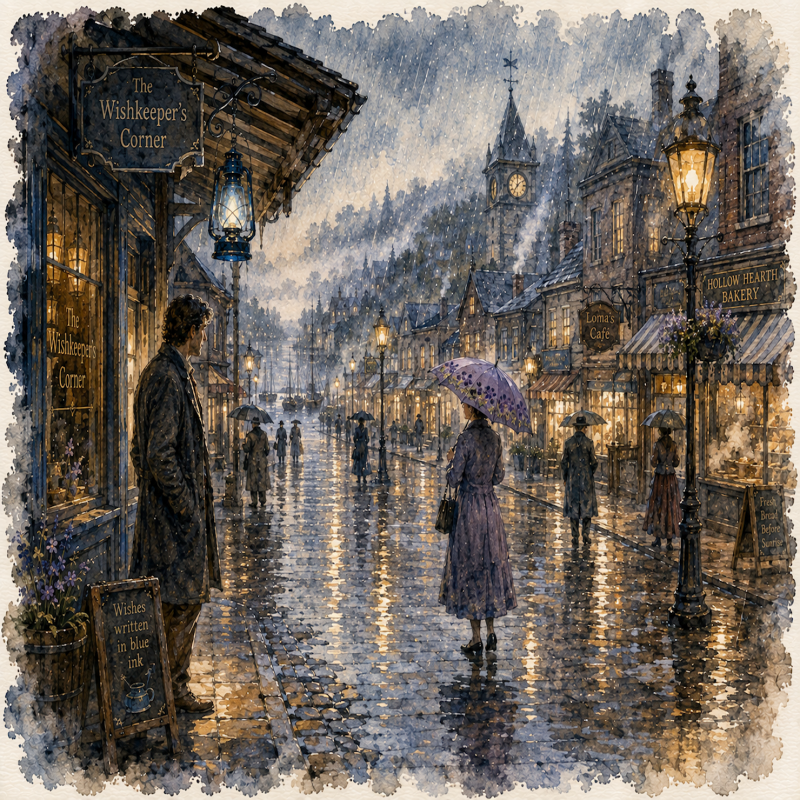
Rain That Sounds Like Memory explores the strange experience of remembering something without knowing exactly what has been remembered.
Rain settles gently over Roadstand Hollow, turning cobblestone streets, glowing windows, umbrellas, and lantern reflections into a village washed in gray and gold.
Then people begin remembering things they cannot quite explain.
A forgotten destination. An old phrase. A familiar melody nobody is playing.
Rain That Sounds Like Memory captures a morning when the Hollow seems unusually quiet—not because nothing is happening, but because the entire village may be listening to something it once knew.
The Woman Who Dreamed Someone Else’s Life: Plate — RH-WC-B2-007
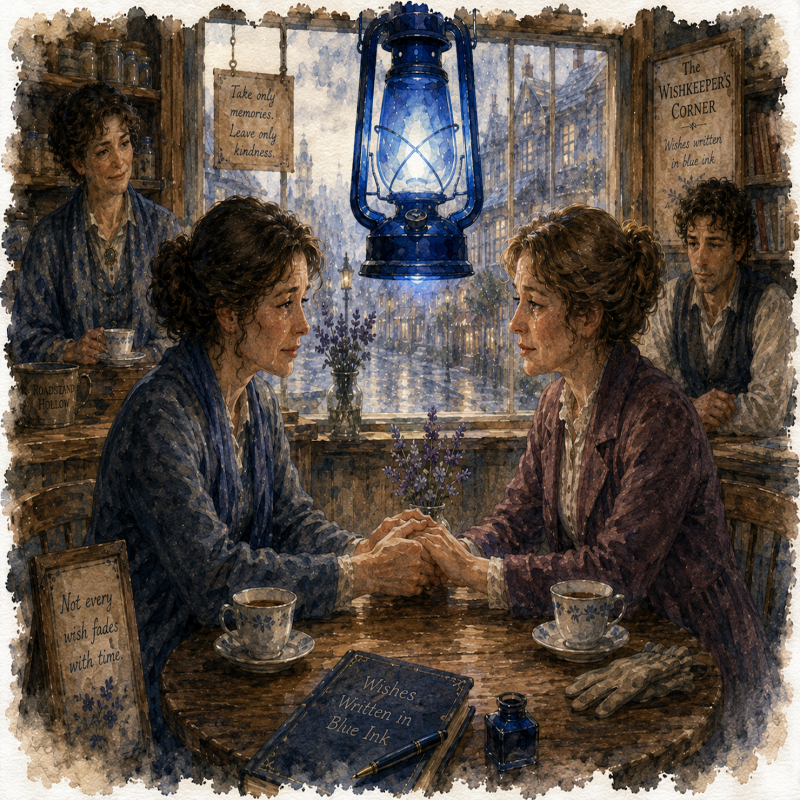
Shared burdens and emotional recognition. The Woman Who Dreamed Someone Else’s Life explores the possibility that sorrow, longing, and unfinished love can become so powerful that they stop belonging to one person alone. The Hollow does not merely preserve memory here. It begins connecting people through it.
Evelyn Harper dreams of rain, a distant station, lanterns, music—and a farewell that never belonged to her.
Then Charlotte Greene enters The Wishkeeper’s Corner.
The women have never met, yet when their hands touch, both recognize the same memories and the same sorrow.
The Woman Who Dreamed Someone Else’s Life captures the moment two strangers discover that whatever Roadstand Hollow is remembering, neither of them has to carry it alone.
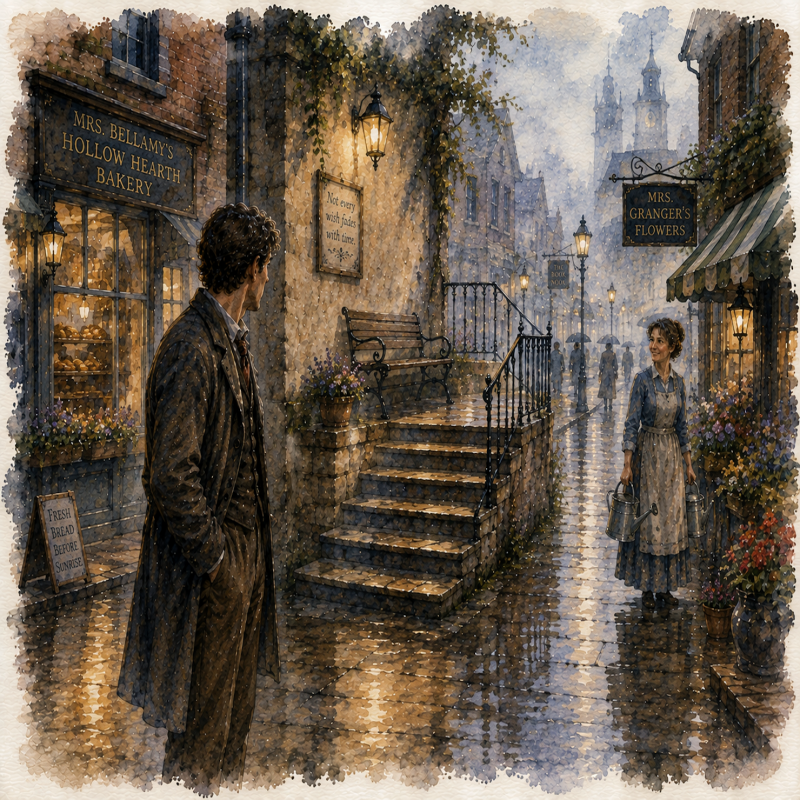
The Street That Changed Overnight: Plate — RH-WC-B2-008
Places remember too.The Street That Changed Overnight expands Book 2’s mystery beyond people and objects. Roadstand Hollow is no longer merely preserving emotional memories inside its hidden room. The village itself appears capable of remembering a version of its own past that no longer matches the present
Elias knows what stood between the bakery and bookstore yesterday. A brick wall.
This morning, four weathered steps rise toward an old bench and flower pot—and Mrs. Granger insists they have been there for decades.
The Street That Changed Overnight captures the moment Roadstand Hollow stops merely remembering people and begins remembering places differently.
Wishes That Return: Plate RH-WC-B2-009
Return without arrival. Wishes That Return explores the idea that unfinished wishes do not always come back as people.
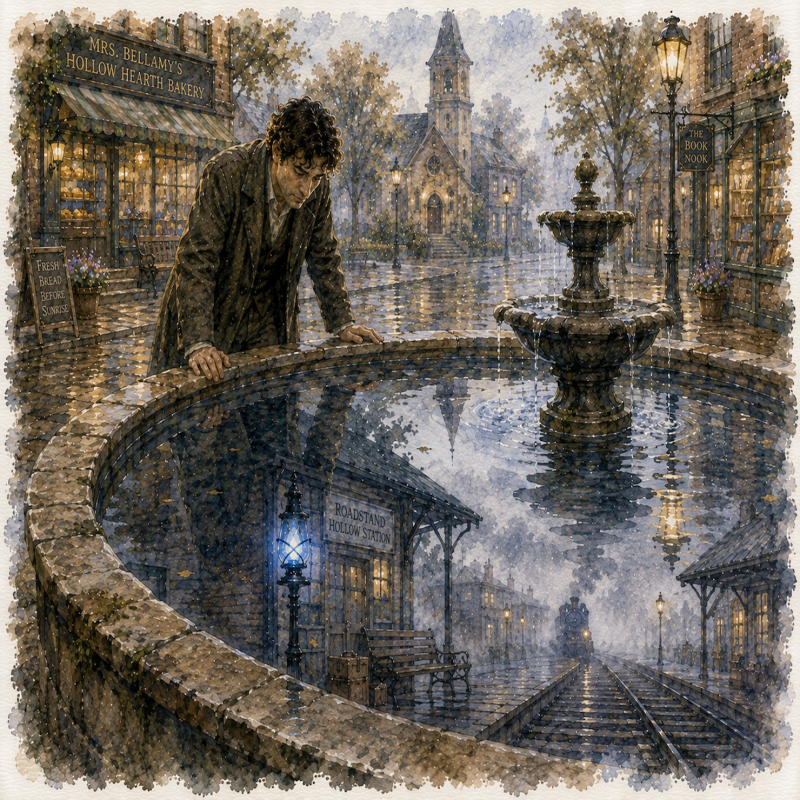
Sometimes they return as places. Reflections. Sounds. Fragments. A station where no station stands. A lantern that belongs somewhere else. A remembered road appearing for only a moment. The wish is trying to find its way home—even when the person who made it cannot.
Elias looks into the village fountain expecting to see the square reflected back at him. Instead, he sees a railway platform. A waiting bench. Empty tracks disappearing into fog.
And a blue lantern burning where no lantern stands.
Wishes That Return captures the moment Roadstand Hollow's forgotten journeys begin appearing inside the present—as though the past itself is searching for a road home.
The Shopkeeper’s Warning: Plate RH-WC-B2-010
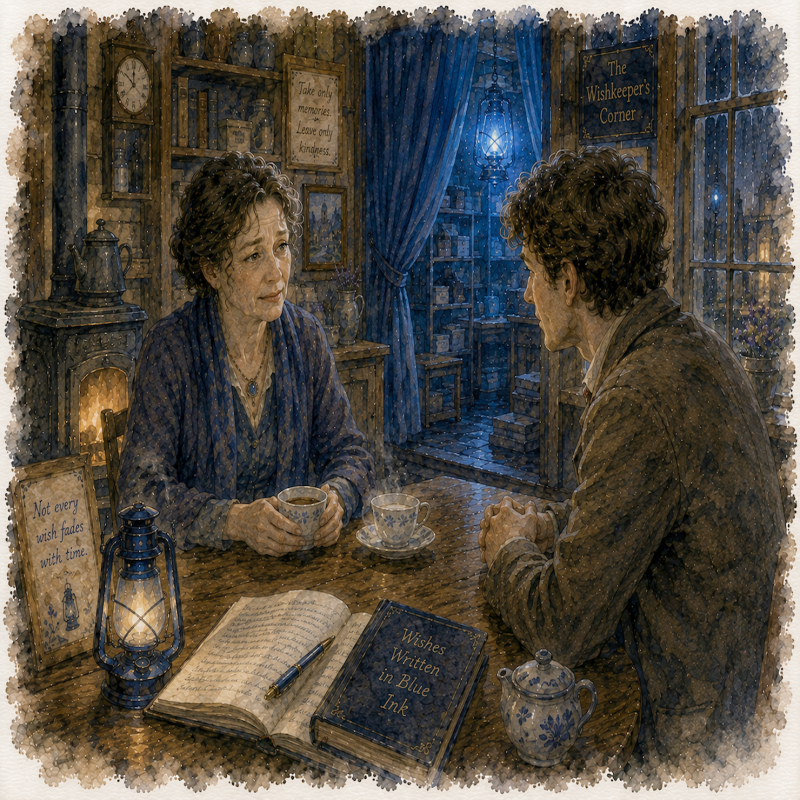
Warnings carried by memory. The Shopkeeper’s Warning explores what happens when the person who has always seemed unshakable finally recognizes something worth fearing. Miriam does not know every answer.
What she does know is that Roadstand Hollow has lived through this before. And whatever ended it last time has been largely forgotten. Miriam Vale has seen strange things before. But when dreams begin spreading, streets shift, and Roadstand Hollow starts remembering experiences no one actually lived, even she becomes uneasy.
After the shop closes, Miriam finally tells Elias the truth: this has happened before. What stopped it? She doesn’t remember. The Shopkeeper’s Warning captures the moment Roadstand Hollow’s calmest keeper admits that some old mysteries were buried for a reason.
The Journal Beneath the Floorboards: Plate RH-WC-B2-011
The preservation and suppression of memory.
The journal represents an earlier attempt to document events that Roadstand Hollow subsequently allowed—or was compelled—to forget. Its damaged pages introduce a distinction between memory lost naturally and history deliberately removed.
Something beneath the floorboards wants to be found.
Hidden near the Wishing Shelf, Elias discovers an old journal describing events disturbingly similar to those now unfolding throughout Roadstand Hollow. But someone has removed the pages containing the answers—and perhaps the ending.
The Journal Beneath the Floorboards captures the discovery that changes the mystery completely. This has happened before.

The Man Who Forgot His Own Wish: Plate RH-WC-B2-012
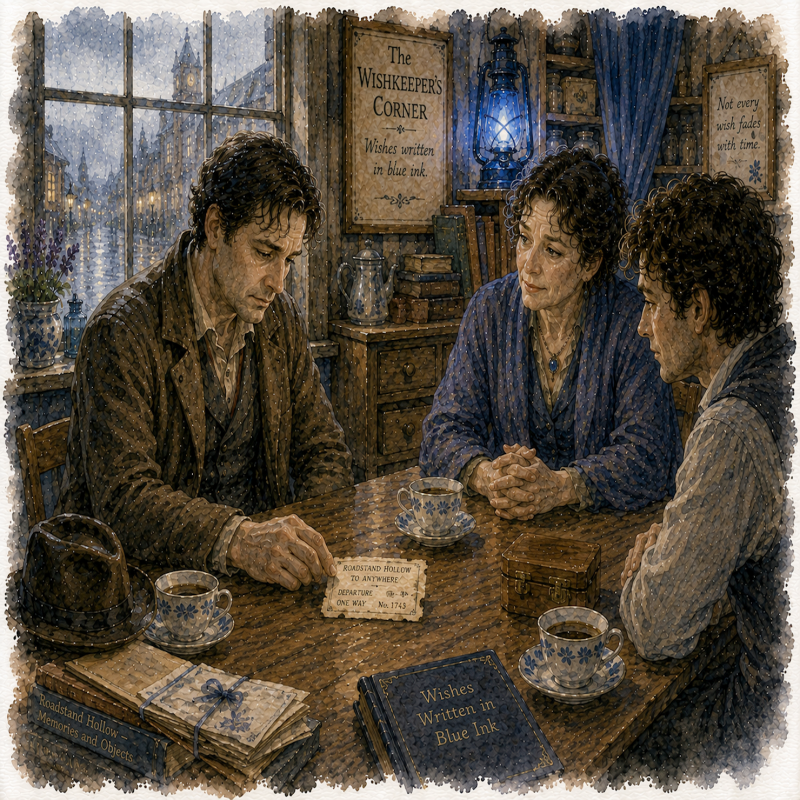
Emotional memory surviving factual loss. This plate examines the distinction between remembering an event and remembering how that event once mattered. The visitor has lost much of the story associated with his wish, yet the emotional structure remains: waiting, regret, attachment, and the desire to return.
He remembers his name. He remembers pieces of his life. But he no longer remembers the wish that once made those pieces belong together. When an old train ticket recognizes him before he recognizes it, fragments begin to return: rain, flowers, a station, and the feeling that someone is still waiting.
The Man Who Forgot His Own Wish captures the quiet ache of remembering how something felt—even after forgetting exactly what happened.
Borrowed Conversations: Plate RH-WC-B2-013
The transfer of unresolved memory through language. Borrowed Conversations examines speech as a vessel through which emotional memory can move between individuals.
The chapter shifts the phenomenon from objects and remembered places into spoken language, suggesting that unfinished experiences may survive not only through possessions but through phrases, rhythms, and emotional patterns.
All morning, people across the Hollow have been saying things they do not remember learning. Then Elias does it too. A sentence about a late train and rain leaves his mouth before he can stop it—and with the words comes the unmistakable feeling of someone else’s loss.
Borrowed Conversations captures the moment Elias realizes that Roadstand Hollow’s memories are no longer simply around him. Some of them are beginning to speak through him.
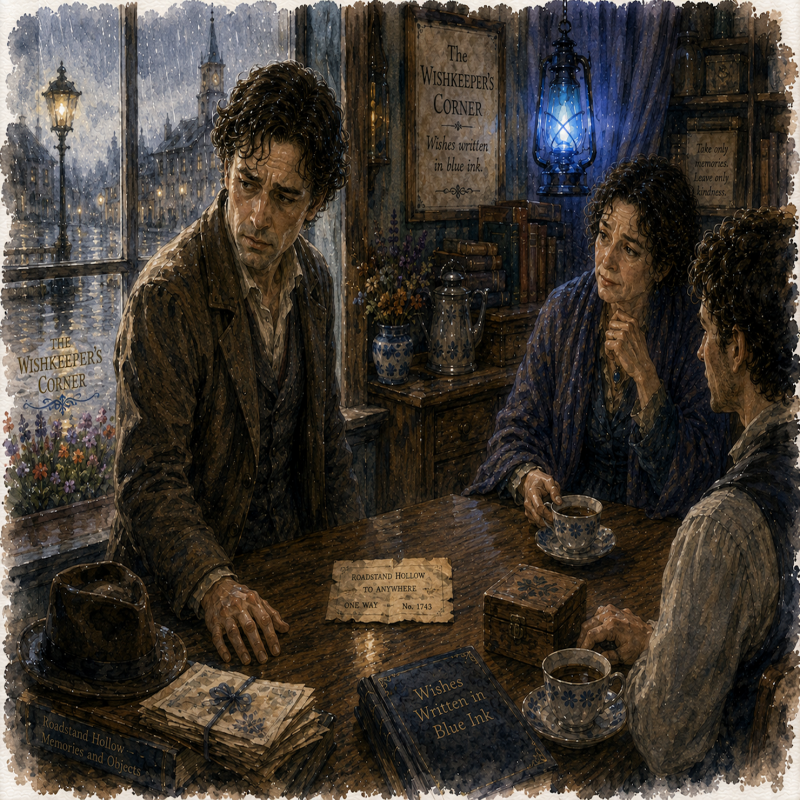
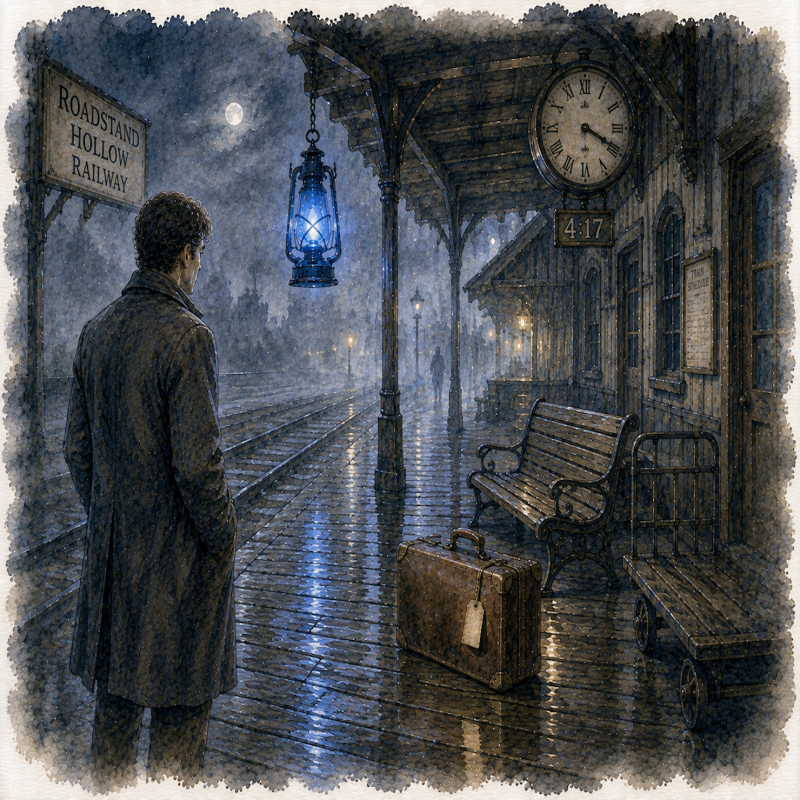
The Hollow After Midnight: Plate RH-WC-B2-014
Memory assuming physical form. The Hollow After Midnight examines the point at which remembered experience is no longer confined to thought, speech, or object.
At midnight, Roadstand Hollow appears capable of reconstructing places associated with unfinished emotional histories. The station is therefore not presented as an apparition, but as an environment temporarily restored by remembrance.
After midnight, the streets lead Elias somewhere that should no longer exist. Through the fog appears an old railway station—wet platform, empty bench, waiting suitcase, blue lantern, and a clock stopped at 4:17. It is not a dream. It is not quite the present.
The Hollow After Midnight captures the moment Roadstand Hollow remembers a place so completely that, for a few quiet hours, the past becomes somewhere Elias can actually stand.
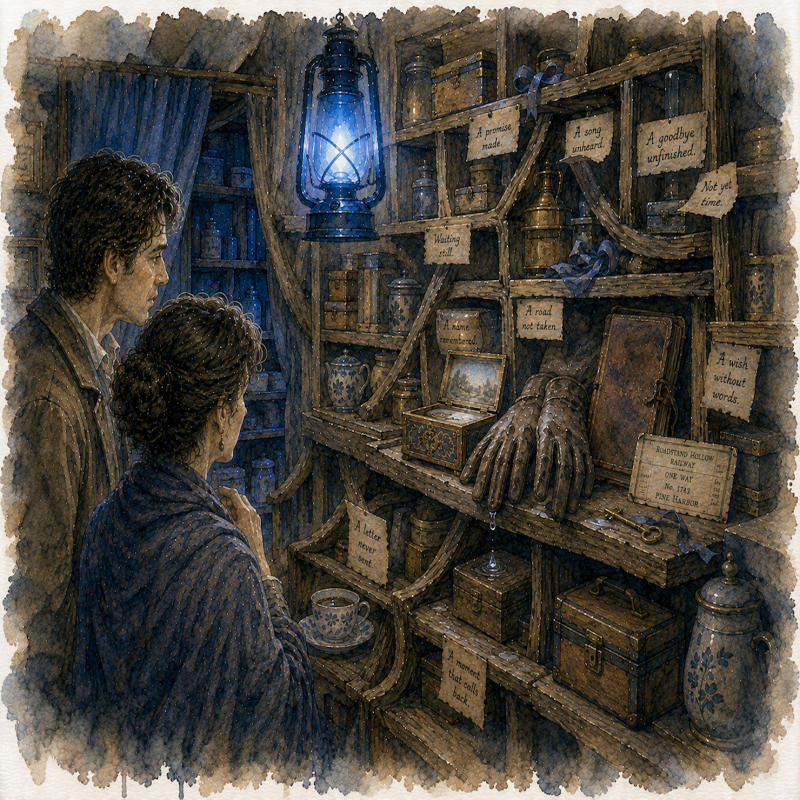
The Shelf Begins Changing: Plate RH-WC-B2-015
Transformation through accumulated attention. The Shelf Begins Changing examines the shift from passive preservation to active response.
The Wishing Shelf has previously functioned as a repository for objects and unfinished wishes. In this work, it begins to alter its own arrangement, receive new objects, and respond visibly to the emotional material it contains.
The shelf has always held unfinished wishes. Now it is beginning to rearrange them. Objects move without being touched. Empty spaces appear. Labels change. And among the familiar keepsakes, Elias discovers a pair of leather gloves still wet from rain that fell somewhere else—and perhaps sometime else.
The Shelf Begins Changing captures the moment the hidden room stops behaving like a place of storage and begins acting as though it has intentions of its own.
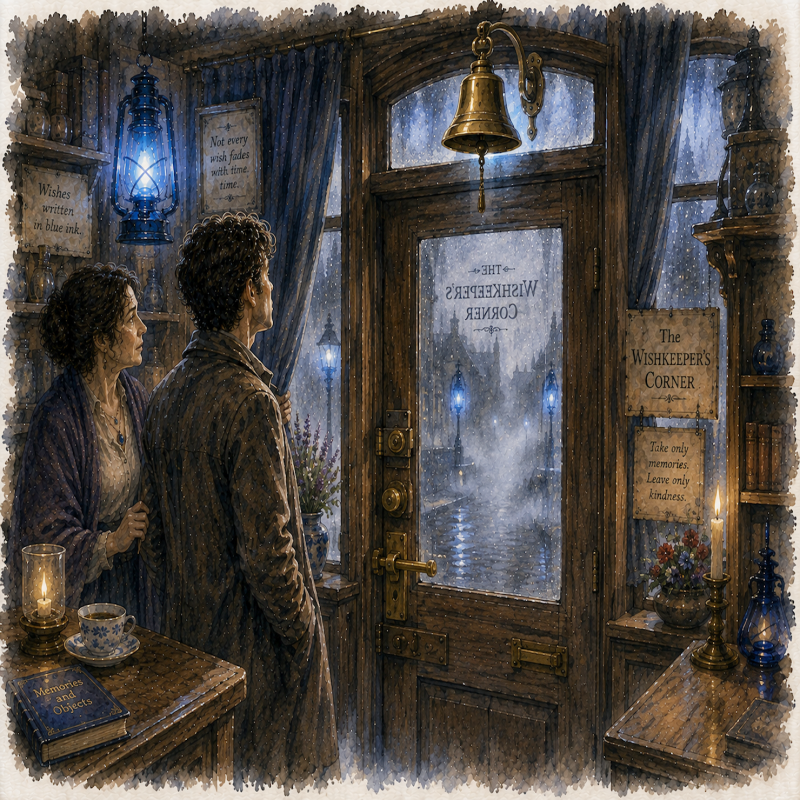
The Bell That Rang Twice: Plate RH-WC-B2-016
Thresholds, recognition, and announced return.
The Bell That Rang Twice examines the threshold as both a physical and symbolic boundary.
The bell, traditionally associated with arrival, becomes a mechanism through which Roadstand Hollow acknowledges that something connected to its unfinished past has drawn close enough to be recognized.
The bell above the door rings. No one enters. Miriam locks the deadbolt, secures the second lock, lowers the brass bar, and waits. Then the bell rings again.
The Bell That Rang Twice captures the moment an ordinary shop bell becomes something far more unsettling: the first ring was a question. The second was an answer.
The Traveler in the Photograph: Plate RH-WC-B2-017
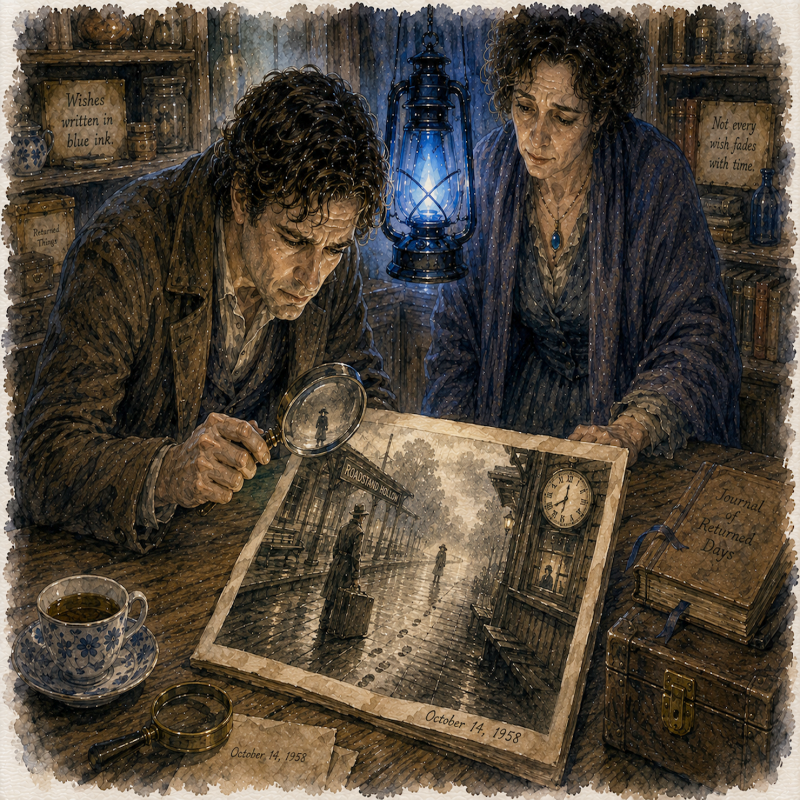
The instability of chronology within remembered experience. The Traveler in the Photograph examines memory as something capable of extending beyond the fixed boundaries of recorded time.
The photograph begins as evidence of a past event, but its changing details suggest that remembrance in Roadstand Hollow is not strictly retrospective. It may incorporate later understanding, present observers, or events not yet complete.
The photograph was taken in 1958. So why does one of the figures inside it look like Elias? As he and Miriam examine the old image, new footprints appear, a hidden figure emerges in a station window, and a distant silhouette begins to resemble someone standing decades outside the photograph’s time.
The Traveler in the Photograph captures the moment an old picture stops simply recording history and begins adding to it.
The Wish That Refused to Fade: Plate RH-WC-B2-018
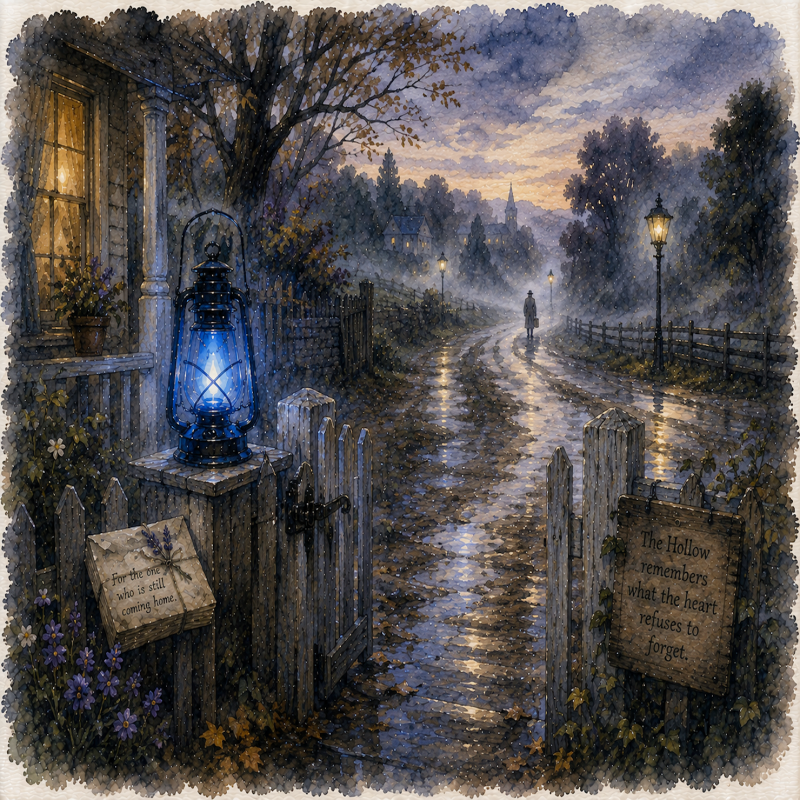
Persistence of unresolved love. The Wish That Refused to Fade examines the endurance of emotional attachment after ordinary memory, distance, and time have failed to provide resolution.
The central idea is not that the traveler could not return. It is that the wish continued to believe return remained possible.
He kept promising he would come home. Someone kept believing him. Years passed. Letters stopped. Seasons changed. But every evening, a blue lantern was still left burning.
The Wish That Refused to Fade captures the quiet persistence of a promise that never accepted it was over—and a road that remained open long after everyone else might have stopped expecting footsteps.
Roads That Lead Backward: Plate RH-WC-B2-019
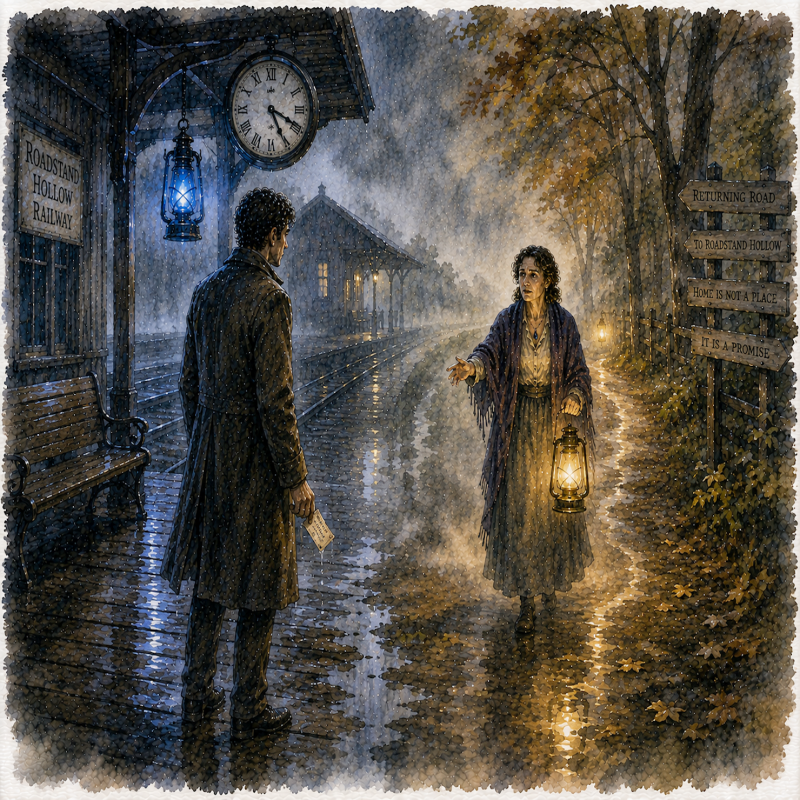
Return as an act of recognition. Roads That Lead Backward examines the danger of allowing memory to become identity.
The remembered road does not merely lead Elias toward the traveler’s past. It draws him into the traveler’s repeated emotional pattern until he begins losing distinction between the story he is witnessing and the self who is witnessing it. The return is achieved not through force, but through recognition of where Elias belongs.
The station wants Elias to stay. The road wants him back. Through the fog, Miriam appears carrying an ordinary golden lantern—and for one impossible moment, the railway platform and the returning road occupy the same place.
Roads That Lead Backward captures the moment Elias must remember something more important than the traveler’s story: who he is, and where he belongs.
The Truth About Dormant Wishes: Plate RH-WC-B2-020
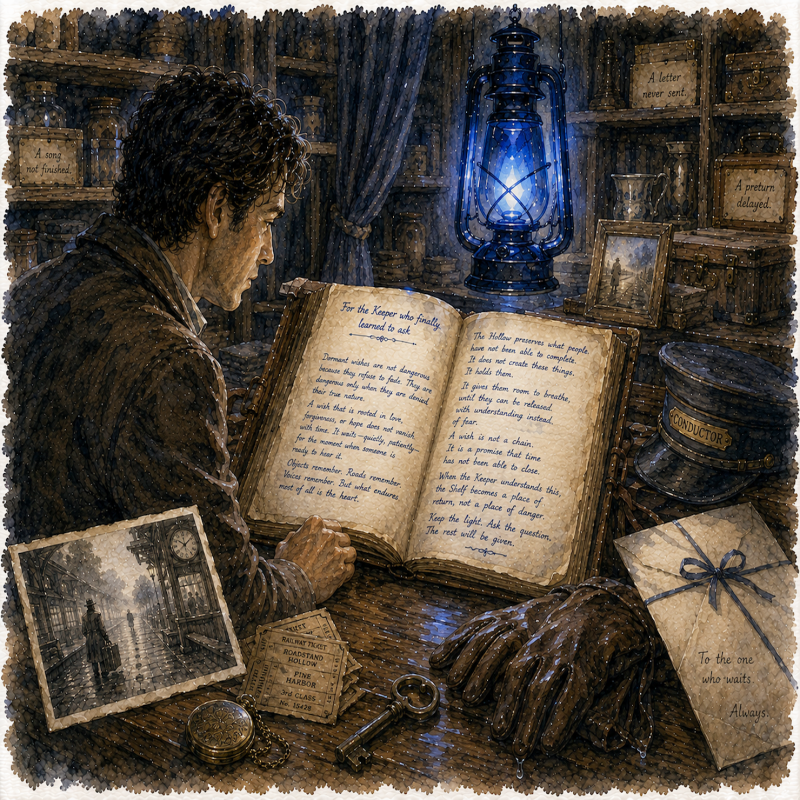
Understanding replaces fear. The Truth About Dormant Wishes examines the reinterpretation of phenomena previously understood as dangerous or unstable.
The restored journal reveals that dormant wishes are not inherently destructive. Their persistence derives from unresolved emotional attachments—love, grief, forgiveness, and hope—that have never been fully relinquished. The work therefore shifts the collection from investigation toward comprehension.
The missing pages have returned. For weeks, Elias has watched dormant wishes move objects, alter roads, borrow voices, and rebuild places that no longer exist. Now the old journal finally explains why. The Truth About Dormant Wishes reveals that the Hollow was never protecting the village from dangerous wishes. It was carrying the love, grief, forgiveness, and hope that people could no longer carry alone.
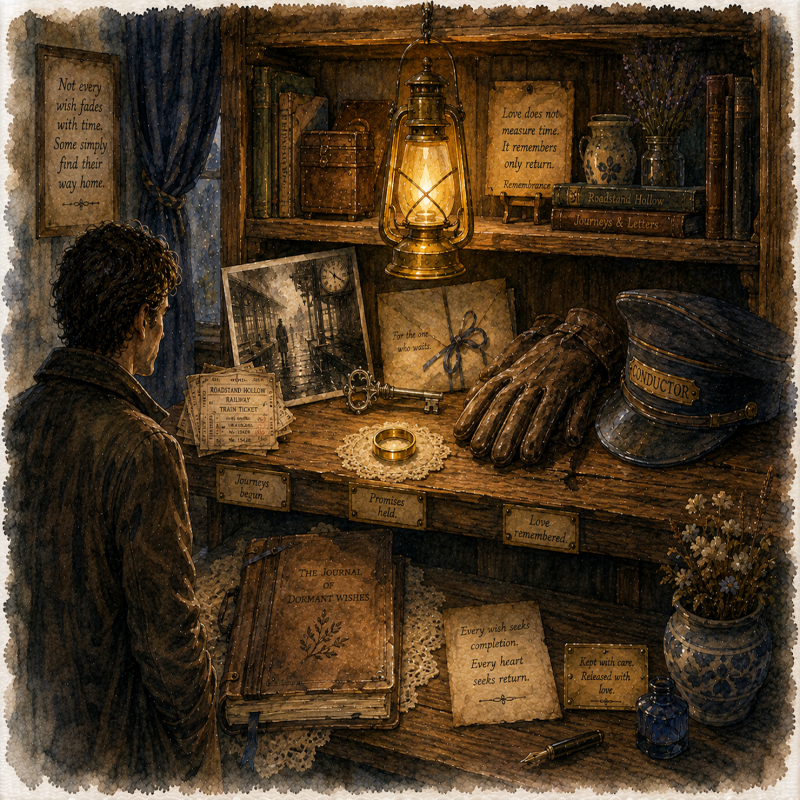
The Things That Stay Behind: Plate RH-WC-B2-021
Remembrance without continuing pain. The Things That Stay Behind examines the distinction between healing and erasure.
Resolution does not require the physical evidence of a life to disappear. The objects remain because their existence is no longer dependent upon unresolved grief. They have ceased functioning as burdens and have become records of meaning.
The wish has found its way home. But the objects remain. The train tickets, photograph, silver key, dried gloves, unfinished letter, conductor’s cap, and simple wedding band still rest together beneath the lantern—only now the lantern glows warm gold.
The Things That Stay Behind captures the gentler truth Roadstand Hollow finally reveals: Healing does not require forgetting. Some things remain because they no longer hurt. They simply matter.
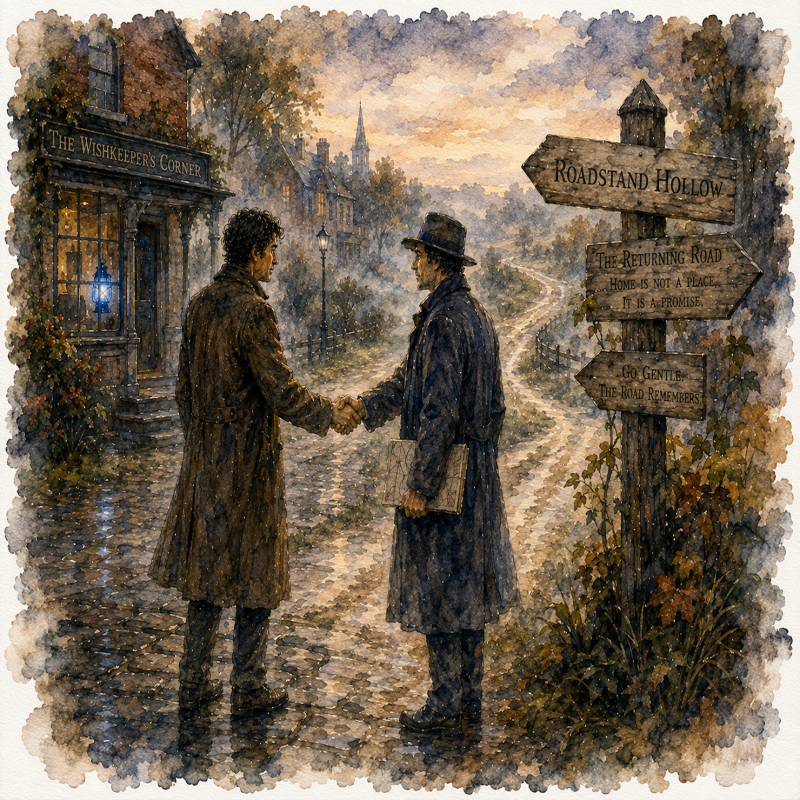
The Goodbye That Felt Familiar: Plate RH-WC-B2-022
Departure without loss. The Goodbye That Felt Familiar examines the difference between leaving because one is lost and leaving because a journey is ready to continue.
Throughout the collection, roads have often represented uncertainty, separation, delayed return, and unresolved longing. In this work, the road acquires a different meaning. It no longer carries someone away from belonging. It simply continues.
This time, the traveler does not look lost.
At the old signpost, Elias and the man exchange a final handshake while the road disappears gently into the mist. Behind them, the blue lantern in The Wishkeeper’s Corner gives one quiet glow. No promise is broken.