
Every Roadstand Hollow song begins long before the first note is written
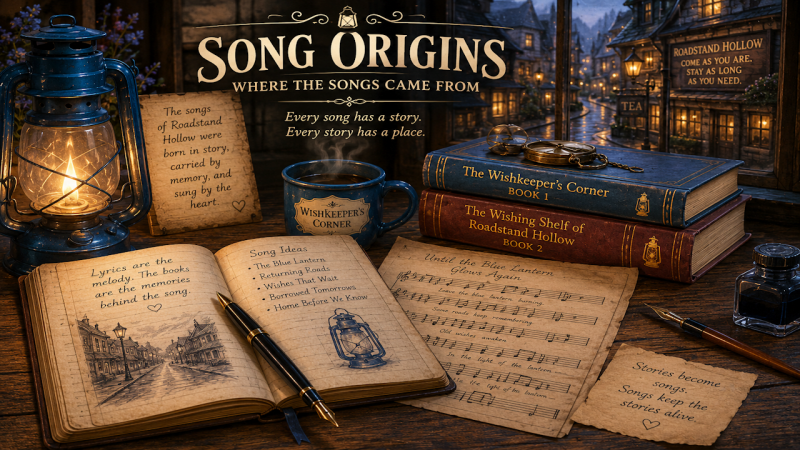
'Song Origins' takes readers behind the lyrics, revealing the scenes, characters, conversations, and unforgettable moments from the Roadstand Hollow novels that inspired each song. Every entry traces the music back to its literary roots by identifying the books, chapters, memorable quotes, and recurring themes woven into the lyrics.
From the glow of the blue lantern to the whistle of a tea kettle, from returning roads to wishes that refuse to disappear, these songs grew naturally from the lives of the people who call Roadstand Hollow home.

Browse the collection, explore each featured song, discover its inspiration, and experience the Roadstand Hollow books in an entirely new way—one song at a time.
About Song Origins
Song Origins is the official companion collection for the Roadstand Hollow music library. Each feature connects a song directly to the novels, showing exactly where the inspiration came from through chapter references, memorable dialogue, recurring symbols, and themes. It transforms every song into another doorway back into Roadstand Hollow, allowing readers and listeners to experience the stories from both the page and the music.
Song Origins – Stories Behind This Song
The series theme song "Until the Blue Lantern Glows Again (Song 150)" weaves together recurring imagery, thematic anchors, and signature quotes from across Book 1 (The Wishkeeper's Corner) and Book 2 (The Wishing Shelf of Roadstand Hollow).
Below is a detailed breakdown of the books, chapters, and key passages that inspired each part of the song:
- Title & Chorus: "Leave the blue lantern burning" / "Some roads keep remembering"
Book 2, Prologue ("The Wish That Never Left") & Chapter 2 ("The Lantern That Flickered Blue")
- The Blue Lantern as a Beacon: The blue lantern hanging outside and inside The Wishkeeper’s Corner is the central visual symbol of hope and patient waiting throughout Book

-
- Book 2, Prologue: "...a blue lantern rested near the door, its flame small but steady, as if it had been waiting through the storm for one person alone."
- Book 2, Chapter 2: "The blue lantern hung exactly where it always had... a slow pulse that brightened, dimmed, and brightened again, as though it were hesitating."
Book 1, Dedication & Map Legend
- Roads That Remember:
- Book 1 Dedication: "Some roads wait patiently. Some wishes never stop searching. And some places remember you long before you remember them."
- Book 1 Visitor's Companion Map: "RETURNING ROAD: The road many travelers wear feels shorter on the way home."
- Verse 1: "A road that remembers... A tea kettle whistles... Old wishes awaken"
Book 1, Prologue ("The Road That Shouldn't Have Been There")
- The Glowing Street & Meeting Strangers:
- Prologue: "A curve ahead revealed the first glimpse of the town. Warm windows glowed through fog. Stone streets shimmered beneath lantern reflections... Small storefronts lined the narrow streets... Rain-scented air drifted inside, carrying traces of bread, tea, wet stone, and fireplace smoke."
Book 2, Chapter 1 ("The Shelf Behind the Curtain") & Chapter 9 ("The Shopkeeper's Warning")
- The Whistling Kettle & Awakening Wishes:
- Book 2, Chapter 1: "The kettle near the counter breathed steam into the room, and somewhere deep inside the walls, wood settled with a patient creak."
- Book 2, Chapter 9: "Do not let the wishes wake fully... A wish forgotten too long becomes something else—not cruel, not evil, simply unwilling to disappear."
- Verse 2: "Whispers of laughter... In the light of the lantern, the heart finds its ease"
Book 1, Chapter 1 ("The Bell Above the Door") & Chapter 5 ("Lanterns in the Rain")
- Finding Rest in the Hollow:
- Book 1, Chapter 1: "'Good place for resting,' he said. 'Town has a way of slowing people down before they realize they need it.'"
- Book 1, Chapter 5: "The Hollow felt alive after dark—not crowded or loud, but alive in the way old memories stayed alive... Most places demanded explanations. Roadstand Hollow offered chairs."
- Bridge: "Some wishes never disappear... time bends"
Book 2, Chapter 2 ("The Lantern That Flickered Blue") & Chapter 8 ("Wishes That Return")
- Time Bending & Lingering Wishes:
- Book 2, Chapter 2: "Dormant wishes are rarely fully quiet... Some wishes keep looking for somewhere to land."
- Book 2, Chapter 8: "Memory isn't always tied to time... It's the way songs vibrate through instruments... and the way love refuses to obey calendars."
- Outro: "As I walk these soft roads, I can finally rest"
Book 1, Part 1 Cover & Chapter 15 ("The Shopkeeper's Almost-Answer")
- Heading Home:
- Book 1, Part 1 Divider Quote: "Some roads lead home before people realize they were looking for home."
- Book 1, Chapter 4: "Some places do not ask people to become different. They simply remind them who they were before the noise arrived."
Song Origins – Stories Behind This Song
The song "Living in the Here and Now (Song 117)" captures Elias Mercer’s central character arc—his transition from a life of corporate burnout, endless momentum, and pure survival to finding peace, presence, and belonging in Roadstand Hollow.
Here are the specific books, chapters, and passages from Book 1 (The Wishkeeper's Corner) and Book 2 (The Wishing Shelf of Roadstand Hollow) that inspired the song:
- Verses: "Caught in the fast lane... years spent asleep..." / "No more surviving..."
Book 1, Prologue ("The Road That Shouldn't Have Been There")
- The Inspiration: Elias reflecting on 21 years of corporate rat-race, constant schedules, and losing his sense of self.
- Specific Passages: "Three weeks ago, Elias's calendar had been impossible to breathe inside.
Meetings stacked on meetings. Deadlines layered over conference calls... Twenty-one years reduced to: a severance packet, a handshake, and advice about 'new opportunities.'"
"The world outside Roadstand Hollow always seemed to be hurrying toward something: deadlines, traffic, noise, obligations, tomorrow."
Book 1, Chapter 5 ("Lanterns in the Rain")
- The Inspiration: The pivotal conversation between Lorna (at the café) and Elias about the difference between surviving and living.
- Specific Passages:
"It brought to mind twenty-one years of performance reviews, commutes, responsibilities, forced smiles, and rigid routines... Somewhere along the way, he had become very good at surviving, but infinitely less good at living."
"Notice what?" "That surviving and living aren't always the same thing."
- Chorus & Title: "Let me stop feeling like I'm passing through" / "No longer a traveler"
Book 1, Chapter 5 ("Lanterns in the Rain")
- The Inspiration: Elias stopping his habit of constantly moving on and viewing himself as a temporary visitor.
- Specific Passages:
"A few days ago, he would've answered automatically—just passing through, temporary, moving on soon—finding safety in the simplicity of it. Now, he hesitated."
"Elias stepped inside slowly, realizing deep beneath his exhaustion, confusion, and emotional uncertainty that he no longer felt entirely like a visitor here."
Book 1, Chapter 4 ("The Streets That Feel Remembered")
- The Inspiration: Elias reading the ledger entry in The Wishkeeper's Corner.
- Specific Passages:
"For the man who kept leaving before realizing he wanted to stay."
"Some places do not ask people to become different. They simply remind them who they were before the noise arrived."
- Verse 2 & Bridge: "Like a flower in bloom... Finally awake..."
Book 1, Chapter 2 ("Wishes for Other People")
- The Inspiration: Clara describing her brother Daniel (and Miriam describing healing) as being "awake again" rather than fixed or restored.
- Specific Passages:
"He's different now... Not healed exactly. Just... awake again."
"People often mistake happiness for returning to who they used to be... But life rarely moves backward emotionally."
Book 1, Chapter 6 ("The Wish Written in Blue Ink")
- The Inspiration: Walter's reflection on living vs. surviving.
- Specific Passages:
"Sometimes people survive so long they forget they meant to live."
"Somewhere deep beneath exhaustion—something inside him no longer felt entirely asleep."
Song Origins – Stories Behind This Song
The song "Don't Let Me Disappear (Song 123)" is directly inspired by Book 2 (The Wishing Shelf of Roadstand Hollow), with thematic roots tied back to Book 1 (The Wishkeeper's Corner).
It centers specifically around the exact handwritten label and emotional plea that surfaces on the wishing shelf in Book 2, Chapter 9 ("The Shopkeeper's Warning") and Chapter 10 ("The Journal Beneath the Floorboards").
- Title & Main Chorus Motif: "Don't let me disappear" / "Stranger to my name" Book 2, Part 2, Chapter 9 ("The Shopkeeper's Warning")
- The Exact Phrase:
"Suddenly, a silver pocket watch struck the floor without any wind. Elias approached the worn object carefully, freezing as he saw a new label written in blue ink: Don't let me disappear."
Book 2, Part 2, Chapter 10 ("The Journal Beneath the Floorboards")
- The Fear of Fading:
"A wish forgotten too long becomes something else—not cruel, not evil, simply unwilling to disappear."
"Please don't forget me... The words matched the lonely plea Elias had felt."
Book 2, Part 3, Chapter 11 ("The Man Who Forgot His Own Wish")
- Becoming a Stranger to One's Name:
"Names disappear first; the Hollow remembers feelings better."
"Eventually... people begin losing pieces of themselves... the visitor whispered, 'I don't know who she was... I think I'm becoming an empty man.'"
- Verses: "Part of me stayed exactly where we'd been" / "Every season carried pieces of my name"
Book 1, Part 2, Chapter 6 ("The Wish Written in Blue Ink")
- Emotional Disappearance vs. Physical Disappearance:
"That someone can disappear emotionally long before they disappear physically... They feared the person forgot themselves."
"Some people leave long before their bodies do."
Book 2, Part 3, Chapter 11 ("The Man Who Forgot His Own Wish")
- Staying Frozen in Time:
"The visitor had continued living... but emotionally, he had never left that train platform; he had simply forgotten why he was still standing there."
- Bridge: "One voice, one light, one promise still surviving the night"
Book 2, Part 3, Chapter 12 ("Borrowed Conversations")
- Voices Whispering in the Darkness:
"One voice trembled, 'Don't let me fade,' and another answered, 'I'm trying... I never stopped looking.'"
"The blue lantern responded with slow, rhythmic pulses... 'The Hollow is trying to finish the conversation.'"
Song Origins – Stories Behind This Song
The song "The Train Station Melody (Song 124)" comes directly from Book 2 (The Wishing Shelf of Roadstand Hollow), with overarching thematic roots tied back to Book 1 (The Wishkeeper's Corner).
The song's title, lyrics, and core narrative directly mirror the recurring supernatural phenomenon that drives the plot of Book 2, where an unforgotten melody connected to a train station promise begins traveling through the townspeople.
- Title & Main Motif: "There's a train station melody... living inside a forgotten song"
- Book 2, Part 2, Chapter 8 ("Wishes That Return")
- The phrase "train station melody" is explicitly named in the text:
"Deep within the Hollow, far beyond the walls of the shop, the train station melody returned stronger than before, as though something had heard its own name and begun waking up."
"The blue lantern brightened one final time as the train station melody played far away—no longer an echo, but the beautiful sound of an arrival."
- Verse 1: "An old man hums it while staring at the rain / A child hears the chorus and sings it again"
- Book 2, Part 2, Chapter 8 ("Wishes That Return")
- The Old Baker Humming:
"Old Mr. Hargrove was arranging fresh loaves inside the bakery while humming to himself... three notes rising, two falling, a pause, then another phrase that somehow felt sad and hopeful at the same time."
-
- The Children Humming:
"Two children skipped rope beside the fountain, one whistling absentmindedly and the other humming the exact same melody without missing a note..."
-
- The Child (Sophie) & The Train Station:
"Mrs. Alvarez's granddaughter Sophie sat outside the café. She was drawing pictures of blue lanterns, a train station, fog, a bench, and a man waving goodbye."
- Verse 2 & Chorus: "A stranger wipes tears from a worn-out face... Stories of love that never lost their way"
- Book 2, Part 2, Chapter 6 ("The Woman Who Dreamed Someone Else's Life")
- Strangers experiencing tears while humming/hearing the song:
"Both women stared at each other. And without warning, both softly hummed the same four notes. The same melody. The same impossible melody... Miss Harper smiled through tears."
- Book 2, Part 3, Chapter 11 ("The Man Who Forgot His Own Wish")
- The forgotten traveler with a worn-out face hearing the train station melody and remembering:
"The man's eyes filled with moisture, his voice dropping to a whisper: 'Like someone is waiting. Waiting much longer than they should have.'... the faint melody returned for only three notes before falling silent."
- Bridge & Outro: "Some songs never really die... The lantern still glows and the melody keeps finding its way home"
- Book 2, Part 2, Chapter 5 ("Rain That Sounds Like Memory")
- Miriam explaining how feelings and melodies endure:
"The Hollow sings sometimes... It usually happens when something has been waiting too long."
- Book 2, Part 3, Chapter 12 ("Borrowed Conversations")
- The melody uniting the town and finishing unfinished stories:
"The blue lantern responded with slow, rhythmic pulses... The Hollow is trying to finish the conversation."
Song Origins – Stories Behind This Song
The song "She Remembered (Song 125)" comes directly from Book 2 (The Wishing Shelf of Roadstand Hollow), with strong thematic foundations tied to Book 1 (The Wishkeeper's Corner).
The song's title, chorus, and narrative arc directly reflect the emotional climax of Book 2, Chapters 8, 9, and 10, where the handwritten blue-ink label "She remembered" appears on the wishing shelf.
- Title & Core Chorus Motif: "She remembered... when the world forgot, she held on"
- Book 2, Part 2, Chapter 8 ("Wishes That Return")
- The Source Text: The exact phrase "She remembered" physically manifests in blue ink beneath the mystery object in the hidden room:
"Elias slowly turned toward the wrapped object, noticing that beneath the label that read Almost Home, another smaller line had appeared in the same blue ink: She remembered."
- Book 2, Part 2, Chapter 10 ("The Journal Beneath the Floorboards")
- The Fragment: The missing pages of the old journal contain a fragment directly mirroring the song's themes:
"Near one of the missing sections, a fragment of half a sentence remained: ...if she remembers..."
- Verses & Themes: "I carried your name through the quiet years..." / "Some promises stay"
- Book 1, Part 2, Chapter 6 ("The Wish Written in Blue Ink") & Book 2, Chapter 4 ("A Wish Left Waiting")
- Carrying a Name / Unanswered Prayers: In Book 1, Chapter 6, Miriam explains how a woman waited for years, reading the blue ink wish:
"For the one who forgot how to come home... They carried photographs... Letters too. Worn almost thin from rereading."
In Book 2, Chapter 4, Miriam tells the story of a wife waiting for decades: "A woman came into the shop... Her husband had disappeared... She made a wish: 'For the man who forgot the road home.'... She kept waiting anyway."
- Book 2, Part 3, Chapter 11 ("The Man Who Forgot His Own Wish")
- When the World Forgot: Miriam describes how facts and names fade from ordinary memory, but the heart holds on:
"Names disappear first; the Hollow remembers feelings better... Sometimes memory lets go before the heart does, leaving the heart to carry a heavy weight without remembering why."
- Chorus & Piano Motif: "With every note played, on this piano's key..." / "Maybe remembering is its own kind of love"
- Book 2, Part 3, Chapter 11 ("The Man Who Forgot His Own Wish")
- The Piano & The Memory Returning:
"The visitor gasped... 'I promised... I told her... No matter how long it takes... I'll come back.'... a warm, gentle woman's voice felt like it smiled through tears inside his mind: 'I never stopped waiting.'"
- Book 2, Part 3, Chapter 12 ("Borrowed Conversations")
- Remembering as Love:
"Not every wish is forgotten because people stop caring... Love is the most unreasonable thing in existence... it refuses numbers, it ignores time, it laughs at common sense..."
Song Origins – Stories Behind This Song
The song "The Hollow Listens (Song 126)" comes directly from Book 1 (The Wishkeeper's Corner) and Book 2 (The Wishing Shelf of Roadstand Hollow).
The title, chorus, and lyrics directly mirror the core philosophy of Roadstand Hollow explained throughout both books: that the town acts as a living, attentive presence that listens to unspoken human emotions and holds onto wishes until they find their way home.
- Title & Chorus Motif: "The Hollow listens when nobody speaks... Holding onto wishes"
- Book 2, Part 2, Chapter 9 ("The Shopkeeper's Warning")
- The Direct Quote: Miriam explicitly explains that the town's defining characteristic is its ability to listen:
"You think because something listens, it must think... Places remember—houses, churches, old cafés, train stations... People leave pieces of themselves behind, and sometimes, places become very good listeners."
- Book 1, Part 2, Chapter 4 ("The Streets That Feel Remembered")
- The Quiet Town Listening:
"Outside, Roadstand Hollow itself felt hushed now, listening almost. It was a sanctuary for someone carrying too much weather inside."
- Verses: "There's a town that remembers every heart... Keeping old promises safe"
- Book 1, Dedication & Map
- Remembrance & Waiting Roads:
"Some roads wait patiently. Some wishes never stop searching. And some places remember you long before you remember them. Welcome to Roadstand Hollow."
- Book 1, Part 2, Chapter 6 ("The Wish Written in Blue Ink")
- Preserving Unspoken Promises & Tears:
"The ledgers... carried a gentle loneliness—the accumulated emotional weight of people trying to hold onto one another across time, distance, grief, and change... The ledger room did not judge sadness; it preserved it carefully..."
- Book 2, Part 1, Chapter 2 ("The Lantern That Flickered Blue")
- Unspoken Whispers:
"Beneath the ordinary sounds of the morning, there was a quiet stillness—not empty, but listening. It was the same feeling from earlier, the sense that the shop itself had become aware... listening."
- Bridge: "Some places spend forever helping people find home"
- Book 1, Part 1, Chapter 1 ("The Bell Above the Door") & Cover
- Finding Home in the Hollow:
"WELCOME TO ROADSTAND HOLLOW: Where Wishes Find Their Way Home."
"Some roads lead home before people realize they were looking for home."
- Book 2, Part 3, Chapter 12 ("Borrowed Conversations")
- Holding Wishes for Years:
"A wish carries emotion—hope, fear, love, regret—until it reaches the place it was meant to go. If it never arrives, it waits... The Hollow carries what people can no longer carry alone."
Song Origins – Stories Behind This Song
The song "Please Don’t Forget Me (Song 127)" comes directly from Book 2 (The Wishing Shelf of Roadstand Hollow), with overarching thematic foundations from Book 1 (The Wishkeeper's Corner).
The title and central plea of the lyrics directly originate from the exact whisper heard by Elias in Book 2, Chapter 9 ("The Shopkeeper's Warning") and Chapter 10 ("The Journal Beneath the Floorboards").
- Title & Main Chorus Motif: "Please don't forget me" / "Beneath a Roadstand sky"
- Book 2, Part 2, Chapter 10 ("The Journal Beneath the Floorboards")
- The Exact Phrase: When Elias stands in the dark hidden room, a voice speaks directly to his heart:
"Elias froze in the blackness as the faint sound of footsteps creaked beyond the shelves.
The silence stretched, and then a soft, barely audible voice older than memory whispered through the dark: 'It remembers you now.' ... The words matched the lonely plea Elias had felt: 'Please don't forget me.'"
- Book 2, Part 2, Chapter 9 ("The Shopkeeper's Warning")
- The Fear of Fading:
"Then, a soft pair of footsteps creaked in the dark lane beside him, and a fragile, broken voice felt like it was whispering directly into his chest: 'Please don't forget me.'"
- Verses: "Standing in the shadows of the years..." / "Living inside a memory of mine"
- Book 1, Part 2, Chapter 6 ("The Wish Written in Blue Ink")
- Living Inside a Memory / Drifting Away:
"People do forget how to return sometimes—not just to towns, but to relationships, to versions of themselves, and to lives they once meant to keep living... 'Not every lost thing disappears suddenly,' she said quietly. 'Sometimes people drift away one small piece at a time.'"
- Book 2, Part 3, Chapter 11 ("The Man Who Forgot His Own Wish")
- Standing Behind in Time:
"The visitor had continued living... but emotionally, he had never left that train platform; he had simply forgotten why he was still standing there."
- Chorus & Bridge: "Maybe every heart leaves echoes behind..." / "One lantern, one road, one memory still glowing"
- Book 1, Part 1, Chapter 2 ("Wishes for Other People")
- Emotional Echoes:
"Roadstand Hollow remembers people emotionally... Sometimes people leave parts of themselves in places without realizing they've done it."
- Book 2, Part 3, Chapter 12 ("Borrowed Conversations")
- Wishes Looking for the Road Back Home:
"A wish carries emotion—hope, fear, love, regret—until it reaches the place it was meant to go. If it never arrives, it waits, but waiting changes it. Eventually the wish begins searching for a way home."
Song Origins – Stories Behind This Song
The song "Come Back (Song 128)" originates directly from Book 2 (The Wishing Shelf of Roadstand Hollow), with thematic roots tied back to Book 1 (The Wishkeeper's Corner).
The song's title, chorus, and central emotional message center on the handwritten blue-ink tag that appears on the wishing shelf and the explicit words wept by Miss Harper in Book 2, Chapter 3 ("The Object With No Owner") and Chapter 6 ("The Woman Who Dreamed Someone Else's Life").
- Title & Core Chorus Motif: "Come back, that's all she said / No blame, no anger... I never stopped waiting"
- Book 2, Part 1, Chapter 3 ("The Object With No Owner"):
- The Tag Appears: When Elias discovers the old pocket watch again, a handwritten tag is attached to its chain with two words:
"Only two words remained. Come back."
- Book 2, Part 2, Chapter 6 ("The Woman Who Dreamed Someone Else's Life"):
- No Anger, Just Hope: Miss Harper looks toward the blue lantern, weeping as she remembers the emotional voice from her dreams:
"And then— with tears streaming down her face— she repeated it. 'Come back.' ... 'I don't know why I said that... Not angry. Not begging... Just sad. But somebody waited... So long. And they never stopped hoping.'"
- Book 2, Part 3, Chapter 11 ("The Man Who Forgot His Own Wish"):
- "I never stopped waiting":
"The visitor gasped... 'I promised... I told her... No matter how long it takes... I'll come back.' ... A warm, gentle woman's voice felt like it smiled through tears inside his mind: 'I never stopped waiting.'"
- Verses: "The years rolled by like freight trains in the rain... Every road kept turning back toward you and me"
- Book 1, Part 2, Chapter 6 ("The Wish Written in Blue Ink"):
- Freight Trains, Rain, & Blue Ink: Miriam tells Elias the story of a traveler searching for home and leaving a wish in blue ink:
"For the one who forgot how to come home... They stayed at Mercer Inn... Walked the streets every day... Read the same entry repeatedly... One evening, they wrote the blue ink wish."
- Book 1, Dedication & Visitor's Companion Map:
- Roads Turning Back Home:
"Some roads wait patiently. Some wishes never stop searching... RETURNING ROAD: The road many travelers wear feels shorter on the way home."
- Chorus & Outro: "The lantern still burns / The porch light still shines"
- Book 2, Prologue ("The Wish That Never Left") & Chapter 2 ("The Lantern That Flickered Blue"):
- The Ever-Burning Blue Lantern: The blue lantern at The Wishkeeper's Corner acts as an unwavering beacon for returning hearts:
"A blue lantern rested near the door, its flame small but steady, as if it had been waiting through the storm for one person alone."
- Book 1, Part 1, Chapter 2 ("Wishes for Other People"):
- Porch Lights Glowing:
"Tiny fragments—a woman waiting beside a train platform, a porch light glowing through rain..."
Song Origins – Stories Behind This Song
The song "The Woman Who Dreamed Someone Else's Life (Song 129)" comes directly from Book 2 (The Wishing Shelf of Roadstand Hollow), with overarching thematic roots in Book 1 (The Wishkeeper's Corner).
The song's title, vocal duet format, and narrative arc directly reflect Part Two, Chapter 6 ("The Woman Who Dreamed Someone Else's Life") of Book 2, which details two female strangers—Miss Evelyn Harper and Mrs. Charlotte Greene—meeting in the shop after dreaming the exact same borrowed memories.
- Title & Core Chorus Motif: "I dreamed somebody else's life... I cried somebody else's tears"
- Book 2, Part 2, Chapter 6 ("The Woman Who Dreamed Someone Else's Life"):
- The Chapter Title Match: Chapter 6 is explicitly titled "The Woman Who Dreamed Someone Else's Life".
- The Source Text: Miss Harper sits in The Wishkeeper's Corner weeping over her dream:
"I woke up crying... I've never had dreams like this... It felt like memory... And the strangest part… It wasn't my life."
"So I dreamed someone else's pain?" "No." Miriam smiled sadly. "You shared it."
- Duet Setup: Two Strangers Meeting & Connecting ("No longer strangers... Two strangers, one dream")
- Book 2, Part 2, Chapter 6 ("The Woman Who Dreamed Someone Else's Life"):
- The Duet Inspiration: In this chapter, a second woman (Mrs. Charlotte Greene) enters the shop and immediately connects with Miss Harper over the same dream:
"The bell above the door chimed... A woman stepped inside... She froze when she saw Miss Harper. Miss Harper looked up. And froze... Both women simply stared. Not with fear. Not confusion. Recognition. Emotional recognition."
"I'm Charlotte Greene." "Evelyn Harper." They shook hands... 'I had the strangest dream last night.' Miss Harper's eyes widened. 'So did I.' Both women stared. 'What was yours?'... 'Train tracks?' 'Yes.' 'Fog?' 'Yes.'"
"I've never met you." Miss Harper nodded. "I know." "But somehow…" Both women smiled through tears. "It feels like we've been waiting to."
- Verses: The Train Station, Blue Light, & Whispers ("Standing at a station beneath blue light")
- Book 2, Part 2, Chapter 6 ("The Woman Who Dreamed Someone Else's Life"):
- The Dream Details:
"I was standing outside... It was raining... There was a train station... The station lights... And the blue lantern."
"And then— with tears streaming down her face— she repeated it. 'Come back.' ... Both women stared at each other. And without warning, both softly hummed the same four notes."
- Bridge: Unfinished Wishes Wandering ("Maybe unfinished wishes still search for a way")
- Book 2, Part 2, Chapter 6 & Book 2, Part 3, Chapter 12 ("Borrowed Conversations"):
- Miriam's Explanation:
"Some wishes never find peace... Emotion seeks resonance... Loneliness recognizes loneliness... People carrying similar burdens sometimes hear each other without knowing."
"A wish carries emotion... until it reaches the place it was meant to go. If it never arrives, it waits... Eventually the wish begins searching for a way home."
Song Origins – Stories Behind This Song
The song "Forgotten Home (Song 130)" originates directly from Book 1 (The Wishkeeper's Corner) and Book 2 (The Wishing Shelf of Roadstand Hollow).
The chorus question ("Have you ever missed a place you've never been?") and the final line ("Because somehow that forgotten place / Has been remembering me") are near-verbatim quotes from key chapters in both books.
- The Key Chorus Question: "Have you ever missed a place you've never been?"
- Book 2, Part 2, Chapter 7 ("The Street That Changed Overnight"):
- As the geography of Roadstand Hollow shifts overnight, a young woman pauses outside the shop and speaks this exact line to Elias:
"Halfway down the street, she paused to ask, 'Have you ever missed a place you've never been?' leaving Elias with chills."
- Outro & Title Inspiration: "Because somehow that forgotten place / Has been remembering me"
- Book 1, Dedication & Prologue ("The Road That Shouldn't Have Been There"):
- Book 1 Dedication:
"Some roads wait patiently. Some wishes never stop searching. And some places remember you long before you remember them. Welcome to Roadstand Hollow."
-
- Book 1, Part 1, Chapter 4 ("The Streets That Feel Remembered"):
"Elias Mercer realized something deeply unsettling... Roadstand Hollow no longer felt like somewhere he was visiting. It felt like somewhere trying to remember him first."
-
- Book 1, Part 3 (Divider Page Title):
"Part Three: The Things the Town Remembers"
-
- Book 1, Part 3, Epilogue Title:
"Epilogue: Some Towns Remember You"
- Verses: Floating Lanterns, Music, and Unexplained Familiarity
- "I've never walked those streets before / Yet somehow I've been there a thousand times or more"
- Book 1, Part 1, Chapter 4 ("The Streets That Feel Remembered"):
"He had never seen it before in his life, yet the sight pulled faintly at him anyway... And for one brief, impossible second, he felt certain he had stood in this exact spot before..."
-
- Book 2, Part 2, Chapter 5 ("Rain That Sounds Like Memory"):
"Mr. Simmons stared harder... 'You remind me of someone.' ... 'I knew you'd come back eventually.' ... The town itself was actively remembering them..."
- "I hear old music drifting through the rain... Faces familiar yet undefined"
- Book 1, Prologue & Chapter 1:
"A piano played somewhere faintly in the distance. Not through speakers. Live. Soft and wandering... A group stood outside Mercer House... Several faces felt oddly familiar. Like people he might pass today without understanding why..."
- "Maybe some roads live inside the soul... Maybe home is more than where we start"
- Book 1, Part 1, Cover & Chapter 1 Quotes:
"Some roads lead home before people realize they were looking for home."
Song Origins – Stories Behind This Song
The song "The Street That Changed Overnight (Song 131)" comes directly from Book 2 (The Wishing Shelf of Roadstand Hollow), with thematic foundations tied back to Book 1 (The Wishkeeper's Corner).
The title, storyline, specific character interactions, and core themes directly mirror Part Two, Chapter 7 ("The Street That Changed Overnight") of Book 2.
- Title & Chapter Match: "The Street That Changed Overnight"
- Book 2, Part 2, Chapter 7 ("The Street That Changed Overnight"):
- The song title is an exact match for the title of Chapter 7 in Book 2.
- The Premise in the Book: Elias wakes up and steps outside to discover the town's buildings, alleys, and steps have physically shifted overnight, yet all the townspeople insist everything is completely normal.
- Verses & Chorus: "The bakery moved... The alley was gone... Everybody swears it's right"
- Book 2, Part 2, Chapter 7 ("The Street That Changed Overnight"):
- The Shifting Bakery & Missing Alley:
"Something about the corner was wrong... between the bakery and the bookstore, four narrow steps and a small iron railing now led upward. Elias stared; those impossible steps had not been there yesterday... The bakery sign now sat directly beside the bookstore window, as though the buildings themselves had shifted closer overnight."
"He turned back one final time and his heart stopped; there was no alley, no opening, and no blue light. Only cold, solid brick met his fingertips. 'How do you lose an alley?' he whispered..."
-
- The Townspeople's Gaslighting / Swearing it's Right:
"Mrs. Granger emerged... 'Those steps have been there forever,' she smiled kindly... 'I... maybe I just missed them,' he muttered... Elias spent the next twenty minutes walking around the block three times... but the altered layout remained stubbornly real."
"Elias stared at their absolute certainty... Either the entire town had lost its mind, or... the Hollow remembers differently than people do."
- Verse & Chorus: "And every answer that I find / Leaves two more questions behind"
- Book 1, Part 2, Chapter 6 ("The Wish Written in Blue Ink") & Book 2, Chapter 1:
- The Recurring Running Joke Throughout Both Books:
"Elias exhaled through his nose. 'The Hollow really has a talent for turning answers into more questions.'"
"Somehow the blue ink wish felt heavier now, not because he knew more, but because he knew less, and questions had multiplied instead of shrinking."
- Bridge & Outro: "Maybe roads remember better than I do... Trying to figure out if I'm lost... or the town"
- Book 2, Part 2, Chapter 7 ("The Street That Changed Overnight"):
- Roads Remembering / The Town Rewriting Yesterday:
"Regret leaves corners, love leaves benches, and hope leaves roads... Roadstand Hollow remembers people better than people remember themselves."
"The Hollow was actively questioning his memories, rewriting its own geography each night."
-
- Lost or the Town:
"Elias was quietly questioning everything. Certainty was contagious... leaving Elias to face the reality that either the entire town had lost its mind, or... the Hollow remembered itself differently."
Song Origins – Stories Behind This Song
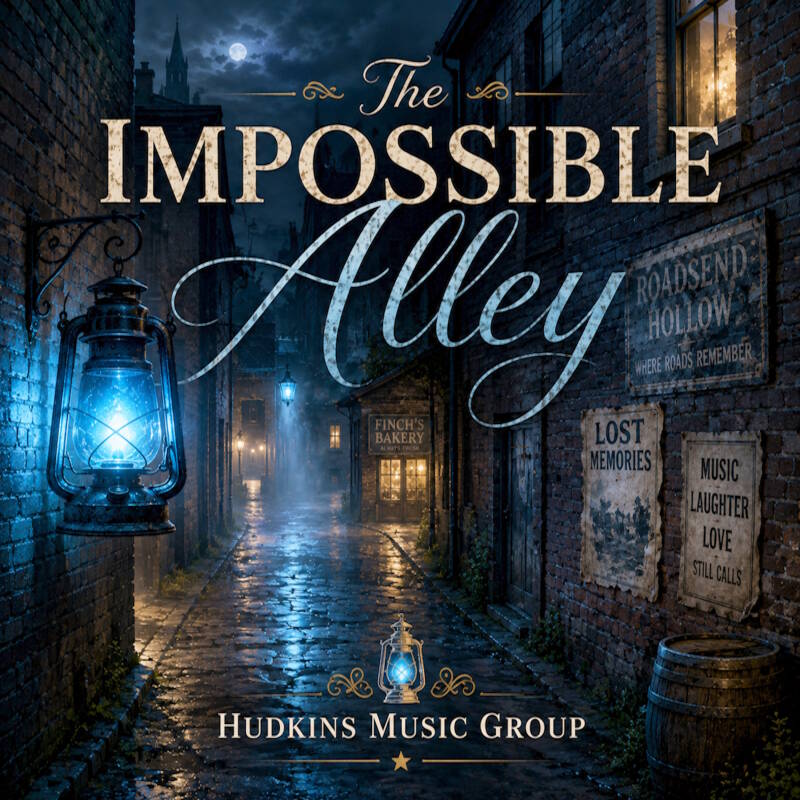
The song "The Impossible Alley (Song 132)" comes directly from Book 2 (The Wishing Shelf of Roadstand Hollow), with overarching thematic roots tied back to Book 1 (The Wishkeeper's Corner).
The title, storyline, specific scene elements, and emotional arc directly mirror the climax of Part Two, Chapter 7 ("The Street That Changed Overnight") in Book 2.
- Direct Narrative Inspiration: The Vanishing Alley Scene
- Book 2, Part 2, Chapter 7 ("The Street That Changed Overnight")
- The Scene: Midway through Chapter 7, Elias walks outside into the cool night after rain and finds a hidden blue-lit alleyway that shouldn't physically exist between two buildings. When he turns back, it vanishes into solid brick:
"Slipped outside into the cool night air... A narrow, slender passage now stretched between the bookstore and a brick building that had never had an alley beside it. It felt emotionally familiar... Farther in, another lantern hung over shifting fragments of whispered promises... He turned back one final time and his heart stopped; there was no alley, no opening, and no blue light. Only cold, solid brick met his fingertips. 'How do you lose an alley?' he whispered into the breeze..."
- Line-by-Line & Imagery Breakdown
Song Lyric
Specific Book Inspiration / Source Text
"Between two buildings I'd passed a thousand times again"
Book 2, Chapter 7: "A narrow, slender passage now stretched between the bookstore and a brick building that had never had an alley beside it."
"Blue light dancing on the cobblestone ground" / "Blue lantern shining in the rain"
Book 2, Chapter 7: "A faint, soft blue light halfway down the block... Farther in, another lantern hung over shifting fragments... there was no alley, no opening, and no blue light."
"I heard old laughter floating through the mist / Voices from a life..."
Book 2, Chapter 7: "It felt emotionally familiar... carrying rain, chimney smoke... and distant bread... soft light, someone laughing, music from another room..."
"And before I turned around / It vanished without a sound"
Book 2, Chapter 7: "He turned back one final time and his heart stopped; there was no alley, no opening, and no blue light. Only cold, solid brick met his fingertips."
"Maybe some roads don't belong to maps"
Book 1, Map Legend: "Some Roads Are Easier To Find Than Others"
Book 2, Chapter 7: "Regret leaves corners, love leaves benches, and hope leaves roads... The roads don't always stay where people leave them."
"Maybe every heart carries hidden doors"
Book 2, Part 1 Divider Quote: "'Some doors are hidden until someone is ready to open them.'"
Song Origins – Stories Behind This Song
The song "Roads Prefer Coming Home (Song 133)" comes directly from Book 1 (The Wishkeeper's Corner) and Book 2 (The Wishing Shelf of Roadstand Hollow).
The core theme, title, and lyrics draw directly from the foundational premise of the series—that roads in Roadstand Hollow possess an emotional memory, preferring to guide searching, weary hearts back home.
- Title & Core Chorus Motif: "Roads prefer coming home... Love remembers every mile"
- Book 1, Visitor's Companion Map:
- The Map Legend: The map highlights Returning Road with the exact thematic tag:
"RETURNING ROAD: The road many travelers wear feels shorter on the way home."
- Book 1, Part 1 Divider Page:
- Core Theme Quote:
"Some roads lead home before people realize they were looking for home."
- Book 2, Part 2, Chapter 7 ("The Street That Changed Overnight"):
- Roads Having Intentions/Preferences:
"Regret leaves corners, love leaves benches, and hope leaves roads... The roads don't always stay where people leave them."
-
- Love Remembering:
"Love remembers," Miriam smiled. "Hope remembers. Loneliness remembers. Joy remembers. And grief… grief remembers everything."
- Verses: "Every road kept turning back again... I met strangers carrying stories of their own"
- Book 1, Dedication & Prologue ("The Road That Shouldn't Have Been There"):
- The Winding Roads & Returning:
"Some roads wait patiently. Some wishes never stop searching. And some places remember you long before you remember them."
"The highway stretched ahead through darkening hills... For the first time in his life, Elias realized he was not entirely sure what waited for him at the other side of it."
- Book 2, Part 3, Chapter 11 ("The Man Who Forgot His Own Wish"):
- Strangers Carrying Unfinished Stories:
"Strangers arrived carrying pieces of the same ache... Every story carried the same feeling of waiting, returning, hope, and home."
- Bridge & Outro: "The lantern glows, the doorway stands... Home still understands"
- Book 1, Part 1, Chapter 5 ("Lanterns in the Rain"):
- Home Offering Space Rather Than Demanding Answers:
"Most places demanded explanations. Roadstand Hollow offered chairs. The difference mattered more than he wanted to admit."
- Book 2, Prologue ("The Wish That Never Left") & Chapter 2 ("The Lantern That Flickered Blue"):
- The Ever-Waiting Blue Lantern:
"...a blue lantern rested near the door, its flame small but steady, as if it had been waiting through the storm for one person alone."
"Some places exist specifically for people standing at emotional crossroads."
Song Origins – Stories Behind This Song
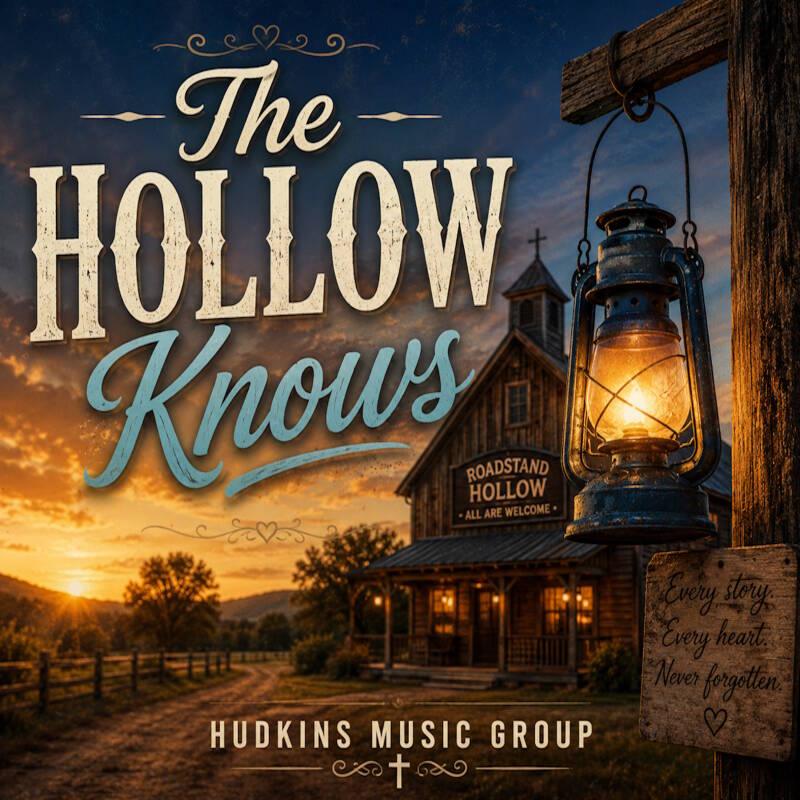
The song "The Hollow Knows (Song 134)" is directly written from the perspective of Miriam Vale (the Wishkeeper) and draws its core lyrics, perspective, and philosophy from Book 1 (The Wishkeeper's Corner) and Book 2 (The Wishing Shelf of Roadstand Hollow).
The title and song prompt explicitly capture Miriam's role across both books: an older, compassionate shopkeeper who has spent a lifetime watching tired travelers arrive, leave, heal, and remember their true selves.
- Title & Chorus Motif: "The Hollow knows, the Hollow sees... The Hollow waits"
- Book 1, Part 1, Chapter 1 ("The Bell Above the Door") & Chapter 2 ("Wishes for Other People")
- The Hollow Knowing Before People Do:
"A second voice answered softly. 'The Hollow usually knows before they do.'"
"I was beginning to think the Hollow had decided to keep you... The town tends to know before people do."
- Book 2, Part 2, Chapter 9 ("The Shopkeeper's Warning")
- The Hollow Seeing and Remembering:
"You think because something listens, it must think... Places remember—houses, churches, old cafés, train stations... People leave pieces of themselves behind, and sometimes, places become very good listeners."
"Roadstand Hollow remembers people better than people remember themselves."
- Verses: "I've watched people come through these doors / Carrying burdens..."
- Book 1, Part 2, Chapter 6 ("The Wish Written in Blue Ink")
- Watching Generations Enter the Shop:
"Miriam stood behind the counter... 'You look like someone walking through memories that don’t entirely belong to him.'... The ledgers carried a gentle loneliness—the accumulated emotional weight of people trying to hold onto one another across time, distance, grief, and change."
- Book 2, Prologue ("The Wish That Never Left") & Chapter 10 ("The Traveler With No Map")
- Carrying Invisible Cost & Burdens:
"The shopkeeper stood behind the counter... her expression held the calm of someone who had heard every kind of sorrow and had learned not to rush any of them."
"I’d spent years pretending I was fine... 'The Hollow appears when something inside a person is finally exhausted enough to stop pretending.'"
- Chorus & Outro: "Hope knows roads... Keeping its lantern lit through all our days"
- Book 1, Part 1 Divider Page Quote & Dedication
- Hope & Roads:
"Some roads wait patiently. Some wishes never stop searching... Some roads lead home before people realize they were looking for home."
- Book 2, Chapter 2 ("The Lantern That Flickered Blue") & Chapter 11 ("The Man Who Forgot His Own Wish")
- Love Moving and Keeping the Lantern Lit:
"Love remembers," Miriam smiled. "Hope remembers. Loneliness remembers. Joy remembers. And grief… grief remembers everything."
"The blue lantern brightened... as if it had been waiting through the storm for one person alone."