

Every Roadstand Hollow song begins long before the first note is written
If you would rather just have the song version summary, visit the Song Page Listings Here

'Song Origins' takes readers behind the lyrics, revealing the scenes, characters, conversations, and unforgettable moments from the Roadstand Hollow novels that inspired each song. Every entry traces the music back to its literary roots by identifying the books, chapters, memorable quotes, and recurring themes woven into the lyrics.
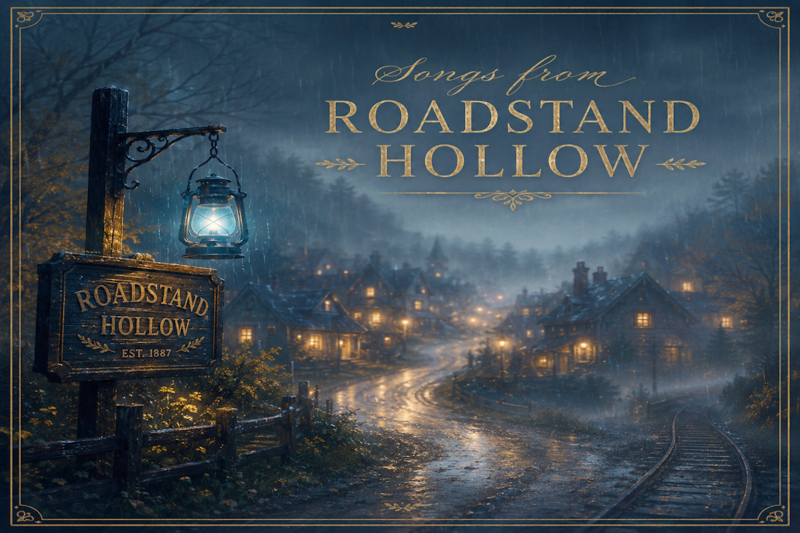
From the glow of the blue lantern to the whistle of a tea kettle, from returning roads to wishes that refuse to disappear, these songs grew naturally from the lives of the people who call Roadstand Hollow home.

Browse the collection, explore each featured song, discover its inspiration, and experience the Roadstand Hollow books in an entirely new way—one song at a time.

About Song Origins
Song Origins is the official companion collection for the Roadstand Hollow music library. Each feature connects a song directly to the novels, showing exactly where the inspiration came from through chapter references, memorable dialogue, recurring symbols, and themes. It transforms every song into another doorway back into Roadstand Hollow, allowing readers and listeners to experience the stories from both the page and the music.
Song Origins – Stories Behind This Song
- "Running out of tomorrows" / "Running out of time":
- In Book 2, Chapter 9, the label under the old train ticket in the hidden room magically changes to read: "Running out of time."
- In Book 2, Chapter 9, the traveler recalls a memory of someone telling him: "You always think you're running out of time."
- In Book 2, Chapter 12, a man sitting in the shop remarks out loud: "Funny how people think they'll always have tomorrow."
- "Some promises grow heavier / The longer that they wait":
- In Book 2, Chapter 11, the section header explicitly states: "Every wish has a weight," and Miriam explains to Elias that "waiting has weight" when an unkept promise or wish goes unresolved.
- Verses: Specific Lines & Character Backstories
- "Every mile looks shorter in the rearview mirror":
- In Book 1, the map of Roadstand Hollow features a caption for Returning Road: "The road many travelers wear feels shorter on the way home."
- "Phone calls sound easier when we delay / Hear the voice of longing, but it slips away":
- In Book 2, Chapter 4, Elias sits alone at night and reflects with regret on how he put off calling his loved ones: "He thought about his sister, Emily, and how their weekly calls had slowly dissolved into simple, cheerful messages over the years because tomorrow always seemed available... the conversations he kept meaning to have 'someday'..."
- "The porch light glows, though emptiness remains":
- In Book 1, Chapter 2, Elias remembers emotional fragments of his past: "a porch light glowing through rain..."
- "How much time can sorrow borrow" / "Hear the voice of longing":
- Book 2, Chapter 12 is directly titled "Borrowed Conversations", in which Miriam explains how unfulfilled wishes begin taking over the townspeople by using "borrowed voices" and "borrowed emotions".
- Bridge: "Maybe hope doesn’t count the calendar"
- In Book 2, Chapter 11, Miriam explains to Elias how wishes and emotions work in Roadstand Hollow: "It's the way songs vibrate through instruments... and the way love refuses to obey calendars."
- In Book 1, Chapter 1, the innkeeper tells Elias: "Roadstand Hollow doesn't seem terribly interested in schedules."
Where Song 136, "Running Out of Tomorrows," Came from
The song #136 "Running Out of Tomorrows" directly pulls its core lines, thematic motifs, and character reflections from Book 1 (The Wishkeeper's Corner) and Book 2 (The Wishing Shelf of Roadstand Hollow).
Here are the exact textual matches and scene references across the two books that inspired the lyrics:
- Title & Chorus: "Running out of tomorrows" / "Some promises grow heavier the longer that they wait"

- "Running out of tomorrows" / "Running out of time":
- In Book 2, Chapter 9, the label under the old train ticket in the hidden room magically changes to read: "Running out of time."
- In Book 2, Chapter 9, the traveler recalls a memory of someone telling him: "You always think you're running out of time."
- In Book 2, Chapter 12, a man sitting in the shop remarks out loud: "Funny how people think they'll always have tomorrow."
- "Some promises grow heavier / The longer that they wait":
- In Book 2, Chapter 11, the section header explicitly states: "Every wish has a weight," and Miriam explains to Elias that "waiting has weight" when an unkept promise or wish goes unresolved.
- Verses: Specific Lines & Character Backstories
- "Every mile looks shorter in the rearview mirror":
- In Book 1, the map of Roadstand Hollow features a caption for Returning Road: "The road many travelers wear feels shorter on the way home."
- "Phone calls sound easier when we delay / Hear the voice of longing, but it slips away":
- In Book 2, Chapter 4, Elias sits alone at night and reflects with regret on how he put off calling his loved ones: "He thought about his sister, Emily, and how their weekly calls had slowly dissolved into simple, cheerful messages over the years because tomorrow always seemed available... the conversations he kept meaning to have 'someday'..."
- "The porch light glows, though emptiness remains":
- In Book 1, Chapter 2, Elias remembers emotional fragments of his past: "a porch light glowing through rain..."
- "How much time can sorrow borrow" / "Hear the voice of longing":
- Book 2, Chapter 12 is directly titled "Borrowed Conversations", in which Miriam explains how unfulfilled wishes begin taking over the townspeople by using "borrowed voices" and "borrowed emotions".
- Bridge: "Maybe hope doesn’t count the calendar"
- In Book 2, Chapter 11, Miriam explains to Elias how wishes and emotions work in Roadstand Hollow: "It's the way songs vibrate through instruments... and the way love refuses to obey calendars."
- In Book 1, Chapter 1, the innkeeper tells Elias: "Roadstand Hollow doesn't seem terribly interested in schedules."